Nigeria’s vast agricultural sector employs about half the workforce and contributes roughly 24% of GDP. Most of this output comes from smallholders – 80% of farmers produce ~90% of Nigeria’s crops. Yet yields are low: for example, average wheat yields are only ~1.1 t/ha, forcing Nigeria to import nearly all its wheat. This gap reflects limited irrigation, mechanization and inputs. Historically, regions with similar yields achieved many-fold gains by adopting better seeds, fertilizer and equipment. Nigeria has the same potential today. We help agribusinesses unlock it by introducing improved seeds, micro-irrigation and precision-fertilizer use tailored to Nigerian conditions. These inputs, combined with digital farm advisory, can sharply raise productivity and rural incomes.
Foreign Investment & Agrifood Transformation in Nigeria
Nigeria’s large population and rising incomes make it an increasingly attractive market. In 2025 the Nigerian government and Afreximbank secured a $1 billion fund to finance 24 million smallholder farmers (who produce ~90% of the country’s food). Such high-level support illustrates Nigeria’s push to modernize its agriculture. In a continent whose food market is expected to reach ~$1 trillion by 2030, Nigeria must scale production to meet domestic demand. At the same time, agriculture in Nigeria offers outsized social returns: World Bank analysis finds that every $1 million invested in agribusiness generates more jobs than the same spending in manufacturing or services.
Key advantages include:
- Large, Growing Market: Nigeria (200+ million people) is Africa’s largest consumer base. Rising urbanization and incomes are fueling food demand. (By comparison, Africa’s overall food market is projected to hit ~$1 trillion by 2030.)
- High Impact & ROI: Agribusiness yields strong social benefits. For example, $1 million in Nigerian agriculture creates more jobs than in manufacturing, helping lift rural incomes.
- Regional Trade Access: Nigeria is a signatory to the African Continental Free Trade Area, linking it to a ~1.2 billion-person, ~$2.5 trillion market. With intra-Africa barriers falling, Nigerian producers can export processed foods and staples across the continent.
- Policy & Financing Support: The government and development banks are expanding funding and incentives. Aside from the Afreximbank deal, Nigeria is investing in special agro-industrial zones and supporting public–private partnerships to boost food processing.
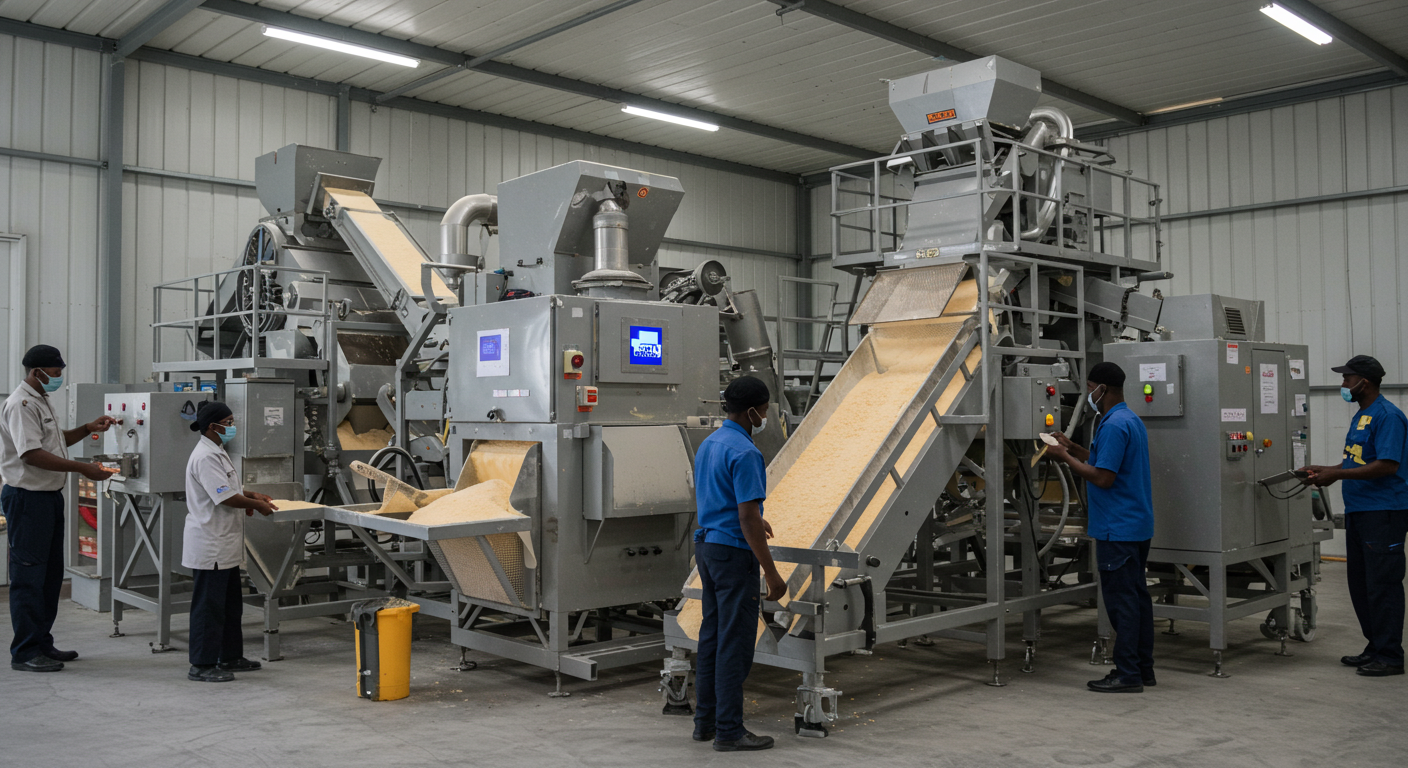
Beyond domestic demand, our focus is on agrifood transformation: moving away from raw commodity exports toward local processing. Nigeria still imports large volumes of staples and ingredients. (In 2023 Nigeria imported about $6.6 billion in agricultural goods.) We help clients build local factories — for example, rice mills, oilseed crushers or cold-pressing units — so that raw crops are processed in-country. This retains value and reduces import bills. For instance, Nigeria’s rice market is worth ~$5 billion annually yet domestic production has fallen; developing rice mills and irrigated farms can capture that market. Similarly, Nigeria leads Africa in cassava and millet output, but still sends much of it abroad or loses it post-harvest. We advise on plant siting (often near crop zones or in agro-parks), equipment imports/assembly, and compliance with standards (NAFDAC/SON certifications). Our team has done market analyses for new flour mills and oilseed plants in Nigeria, projecting input availability and offtake. We align these projects with local policies — for example, Nigeria’s anchor-borrower programs and state incentives — so that facilities are profitable from Day 1. As AFDB analysts note, Nigeria’s shift to food processing (using the SAPZ model) is key to job-rich growth.
Secure Ingredient Sourcing & Value-Chain Development
Global food companies sourcing from Nigeria need reliable, year-round ingredients with full traceability. We design end-to-end supply chains that link Nigerian farmers to processors. This means mapping crop production zones and organizing growers into outgrower cooperatives or contract-farming schemes. In practice, farmer partnerships are central: we help clients set up long-term procurement contracts and on-farm training for growers of maize, cassava, oil palm, etc. Engaging smallholders this way ensures a stable raw-material supply and raises on-farm quality. We also strengthen quality controls: introducing lab testing, certification (organic, Fairtrade, ISO, etc.) and good agricultural practices at collection points, so the raw produce meets export-grade standards.
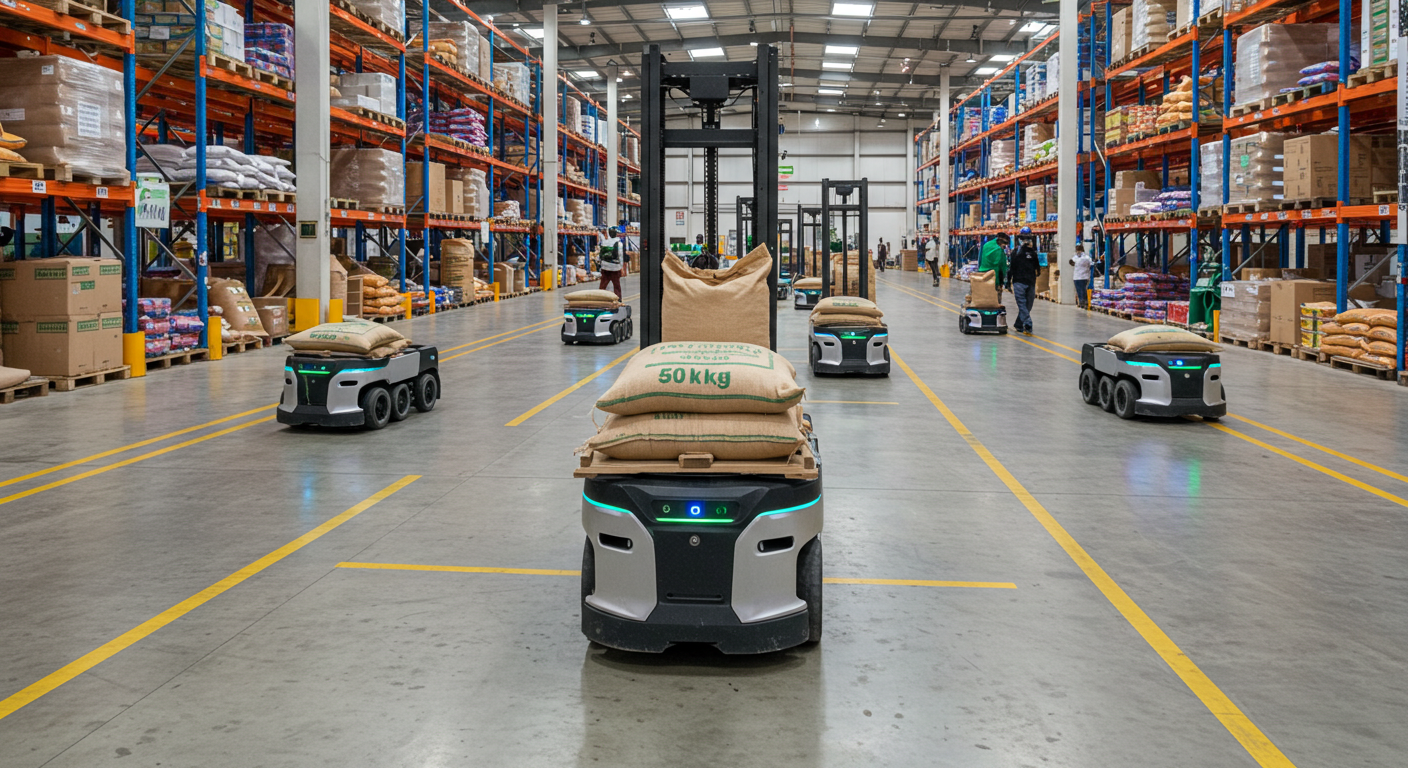
Traceability technologies are another pillar. We implement digital tools (mobile apps, blockchain pilots, GPS tagging) so that every batch is fully traceable from farm to factory. (For example, targeted digital advisory in Nigeria has already boosted farmer profits by ~10%, illustrating the power of data-driven farming.) Such systems reduce fraud and disputes: buyers can verify a shipment’s origin, variety and chemical usage. We also identify cold-chain investments. Nigeria currently loses about 40% of its food to post-harvest spoilage, so we assess needs for solar-refrigerated storage, silo silos and climate-controlled transport. By integrating cold storage and improved logistics, clients can vastly cut losses — especially for perishables like fruits, vegetables and tubers.
By building these secure value chains, our clients gain assured, export-quality supplies year-round. We apply advanced monitoring (including digital platforms and AI analytics) to oversee the chain: from weather and inventory sensors on farms, to e-procurement and payment tracking at collection centers. This end-to-end transparency not only satisfies multinational buyers’ requirements, but also delivers social and environmental benefits — higher incomes for Nigerian farmers and reduced waste across the supply network.
Agritech & Foodtech Transfer through Partnerships
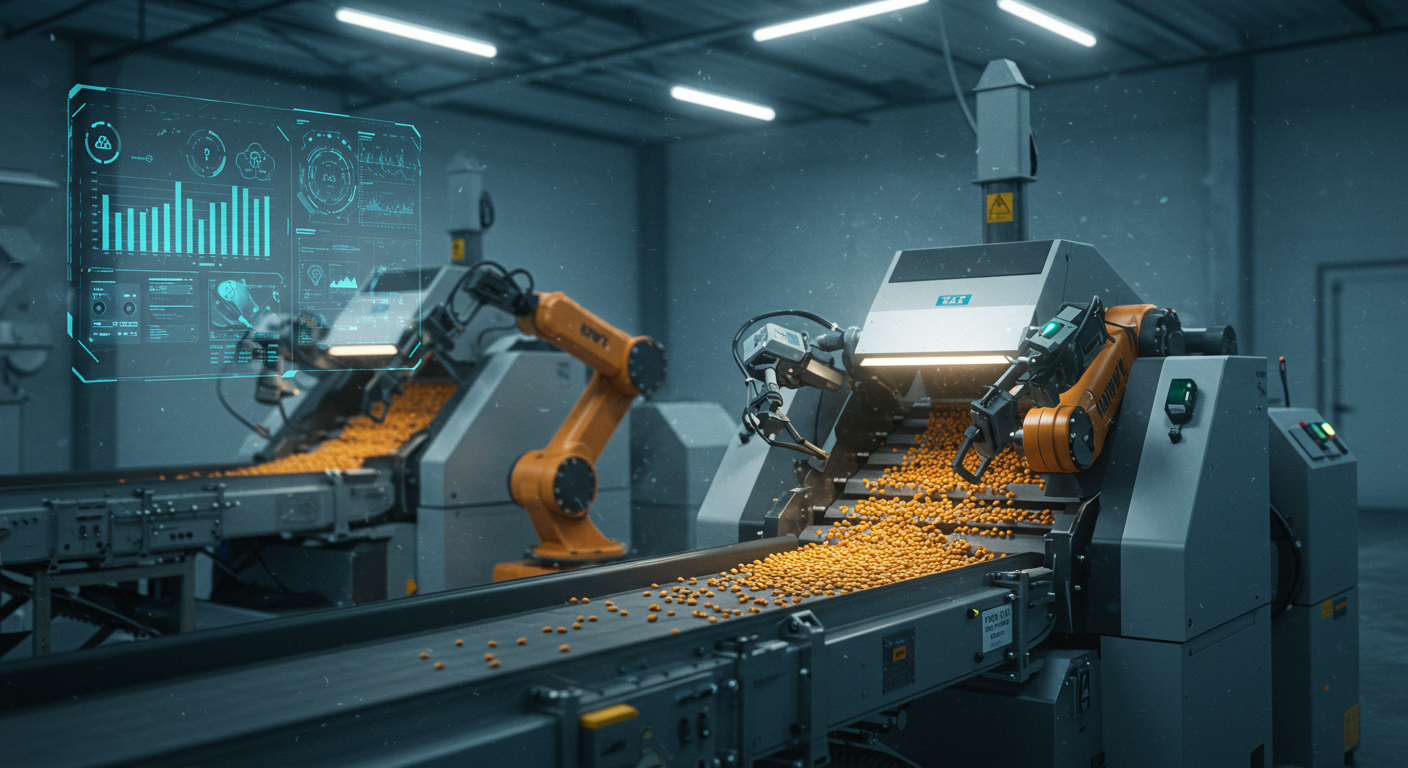
Closing Nigeria’s yield gap requires cutting-edge technology and know-how. We facilitate technology transfer partnerships between international agritech/foodtech innovators and Nigerian entities. This can include licensing high-yield seed varieties, efficient irrigation systems, mechanized planters or post-harvest equipment, and adapting them for local conditions. For example, Nigeria recently approved four new biotech maize varieties (the TELA hybrids), making it the second African country to deploy GE corn. We help extend such advancements to other crops, working with Nigerian research institutes (IITA, NAERLS, etc.) and input companies. On the food-processing side, we arrange deals for packaging machinery, nutrition-fortification lines or clean-energy mills so Nigerian factories adopt the latest methods.
Our key services include:
- Innovation Scouting: We continuously survey global agritech/foodtech trends (drones, biotech seeds, precision equipment, digital platforms, etc.) and evaluate what can succeed in Nigeria’s environment.
- Deal Structuring: We negotiate licensing and partnership agreements. For instance, we might help a European greenhouse firm license its design to a Nigerian investor, ensuring clear IP terms and setting up pilot demos.
- Localization & Training: We customize each technology to Nigeria’s crops, languages and skills. Local training programs are critical. (For example, digital extension services tailored for Nigerian farmers have been shown to raise profits significantly.) We help implement field training – from workshops on equipment maintenance to smartphone-based advisory for agronomy.
Mechanized farming (like modern tractors and planters) can dramatically raise Nigerian yields by enabling timely planting and precise nutrient application. Through our tech-transfer projects, clients can deploy such equipment locally.
Equally important is hands-on training. We support programs that train Nigerian farmers and technicians to use new tools and practices. For example, collaborative initiatives (like HelloTractor’s training programs) show how equipment-training boosts productivity. We replicate these models nationwide.
Through these efforts, our clients fast-track the introduction of state-of-the-art tools into Nigerian fields and factories. We’ve seen PPP-driven tech projects (with donors or research partners) significantly improve yields and incomes in pilot regions; our goal is to scale that success across Nigeria’s diverse agro-ecologies.
Summary
For global agribusinesses entering Nigeria, we offer a full suite of services: investment strategy, market entry analysis, supply-chain engineering and technology deployment – all customized to Nigeria’s context. We ground our recommendations in the latest data and policy landscape. Nigeria’s government and experts emphasize a production-driven model: shifting from raw-commodity farming to value-added manufacturing to drive jobs and food security. By aligning capital with smart sourcing and tailored technology, our clients can capture the huge untapped potential of Nigerian agriculture. In short, we help turn Nigeria’s agricultural opportunities — from large-scale mechanization to digital traceability — into real business results, supporting food security, rural livelihoods and profits simultaneously.
Contact us to learn how our expertise can turn these Nigerian agribusiness opportunities into reality.
Kosona Chriv
Co-Founder, Chief Operating Officer and Chief Sales and Marketing Officer
WhatsApp/Telegram: +234 904 084 8867
Email: kosona@dekoholding.com
LinkedIn: linkedin.com/in/kosona
Deko Integrated & Agro Processing Ltd
IDUBOR HOUSE, No. 52 Mission Road (by Navis St.)
Benin City, Edo State, Nigeria | RC 1360057
Our WhatsApp channel https://whatsapp.com/channel/0029Va9I6d0Dp2Q2rJZ8Kk0x
Bibliography
1. Central Bank of Nigeria (CBN).
Anchor Borrowers’ Programme: Boosting Agricultural Production and Self-Sufficiency in Nigeria.
Abuja: CBN Publications, 2023.
https://www.cbn.gov.ng/dfd/agriculture/cdi/wheat.html
2. Federal Ministry of Agriculture and Food Security (FMAFS).
National Agricultural Technology and Innovation Policy (2022–2027).
Abuja: FMAFS, 2022.
3. African Development Bank (AfDB).
Nigeria: Agricultural Transformation Agenda Support Program (ATASP I) – Completion Report.
Abidjan: AfDB, 2023.
https://www.afdb.org/en/documents
4. United Nations Food and Agriculture Organization (FAO).
Country Programming Framework for Nigeria (2023–2027).
Rome: FAO, 2023.
https://www.fao.org/nigeria
5. International Fund for Agricultural Development (IFAD).
Value Chain Development Programme (VCDP): Final Evaluation Report.
Rome: IFAD, 2023.
https://www.ifad.org/en/web/operations/w/country/nigeria
6. United States Department of Agriculture (USDA) Foreign Agricultural Service.
Grain and Feed Annual: Nigeria 2024.
Washington, D.C.: USDA, 2024.
https://www.fas.usda.gov
7. National Bureau of Statistics (NBS).
Gross Domestic Product Report Q2 2025: Agriculture Sector Contribution.
Abuja: NBS, 2025.
https://nigerianstat.gov.ng
8. Trade.gov (U.S. Department of Commerce).
Nigeria – Agriculture Sector Overview.
Washington, D.C., 2024.
https://www.trade.gov/country-commercial-guides/nigeria-agriculture-sector
9. World Bank Group.
Nigeria: Country Economic Memorandum – Seizing the Opportunity for a More Productive, Resilient, and Inclusive Economy.
Washington, D.C.: World Bank, 2023.
https://documents.worldbank.org
10. Agronigeria.
Nigeria’s Wheat Cultivation Covers 118,000 Hectares Across 11 States — FG.
Abuja: AgroNigeria News Service, 2024.
https://agronigeria.ng
11. International Food Policy Research Institute (IFPRI).
Accelerating Agricultural Productivity Growth in Nigeria: Evidence and Policy Options.
Washington, D.C.: IFPRI, 2022.
https://www.ifpri.org
12. African Export-Import Bank (Afreximbank).
AfCFTA-Driven Investment in Agribusiness and Agro-Industrial Parks: Nigeria Country Focus.
Cairo: Afreximbank, 2024.
https://www.afreximbank.com
13. United Nations Industrial Development Organization (UNIDO).
Agro-Industrial Parks Development in Africa: Nigeria Case Study.
Vienna: UNIDO, 2023.
https://www.unido.org
14. Nigeria Incentive-Based Risk Sharing System for Agricultural Lending (NIRSAL).
Annual Report 2024: Catalyzing Agribusiness Investment through Risk Management and Value Chain Financing.
Abuja: NIRSAL, 2024.
https://nirsal.com
15. Oxford Business Group.
The Report: Nigeria 2024 – Agriculture and Industry Chapters.
London: OBG, 2024.
https://oxfordbusinessgroup.com
I hope you enjoyed reading this post and learned something new and useful from it. If you did, please share it with your friends and colleagues who might be interested in Agriculture and Agribusiness.
Mr. Kosona Chriv
Founder of LinkedIn Group « Agriculture, Livestock, Aquaculture, Agrifood, AgriTech and FoodTech » https://www.linkedin.com/groups/6789045/
Co-Founder, Chief Operating Officer and Chief Sales and Marketing Officer
Deko Integrated & Agro Processing Ltd
IDUBOR HOUSE, No. 52 Mission Road (by Navis St.)
Benin City, Edo State, Nigeria | RC 1360057
Chief Sales & Marketing Officer
Adalidda
Follow-me on
✔ WhatsApp: +2349040848867 (Nigeria) +85510333220 (Cambodia)
✔ X https://x.com/kosona
✔ BlueSky https://bsky.app/profile/kosona.bsky.social
✔ Instagram https://www.instagram.com/kosonachriv
✔ Threads https://www.threads.com/@kosonachriv
✔ LinkedIn https://www.linkedin.com/in/kosona
✔ Facebook https://www.facebook.com/kosona.chriv
✔ Tiktok https://www.tiktok.com/@kosonachriv
WhatsApp Channel: https://whatsapp.com/channel/0029Va9I6d0Dp2Q2rJZ8Kk0x