Brazil stands at the center of the global sugar trade. As the world’s largest producer and exporter, Brazil supplies a significant share of internationally traded sugar, shaping both price dynamics and supply availability. Data from Companhia Nacional de Abastecimento and United States Department of Agriculture (USDA) consistently show annual production in the range of 38 to 45 million metric tons, with exports often exceeding 25 million tons.
However, for importers seeking refined sugar, one critical reality must be understood early: Brazil is primarily a raw sugar powerhouse, not a refined sugar exporter. ICUMSA-45, the highly refined, low-color sugar required by food, beverage, and pharmaceutical industries, represents only a small fraction of total output. This structural imbalance between production and demand is what makes ICUMSA-45 from Brazil both attractive and operationally complex.
Understanding Where ICUMSA-45 Comes From
Brazil’s sugar industry is geographically divided, and this has direct implications for sourcing.
The Center-South region, led by São Paulo and neighboring states, dominates overall production. It is home to highly mechanized, large-scale mills operated by groups such as Raízen and São Martinho. These operations are optimized for efficiency and scale, but their primary focus is raw sugar and ethanol, not refined ICUMSA-45.
By contrast, the Northeast region, including Alagoas and Pernambuco, plays a more strategic role for refined sugar. Mills in this region, including groups like Usina Coruripe, are closer to export terminals such as Port of Maceió and are more likely to produce or package ICUMSA-45 for export markets. While total volumes are smaller, accessibility and product suitability often make this region more relevant for buyers of refined sugar.
This regional contrast explains why many ICUMSA-45 transactions are not executed directly with large industrial producers, but instead involve intermediaries or trading houses that consolidate supply.
The Nature of ICUMSA-45 in Brazil
ICUMSA-45 is defined by its high purity and low color, with specifications that typically include color below 45 ICUMSA units and polarization above 99.8 percent. These characteristics make it suitable for industries where visual clarity and chemical consistency are essential.
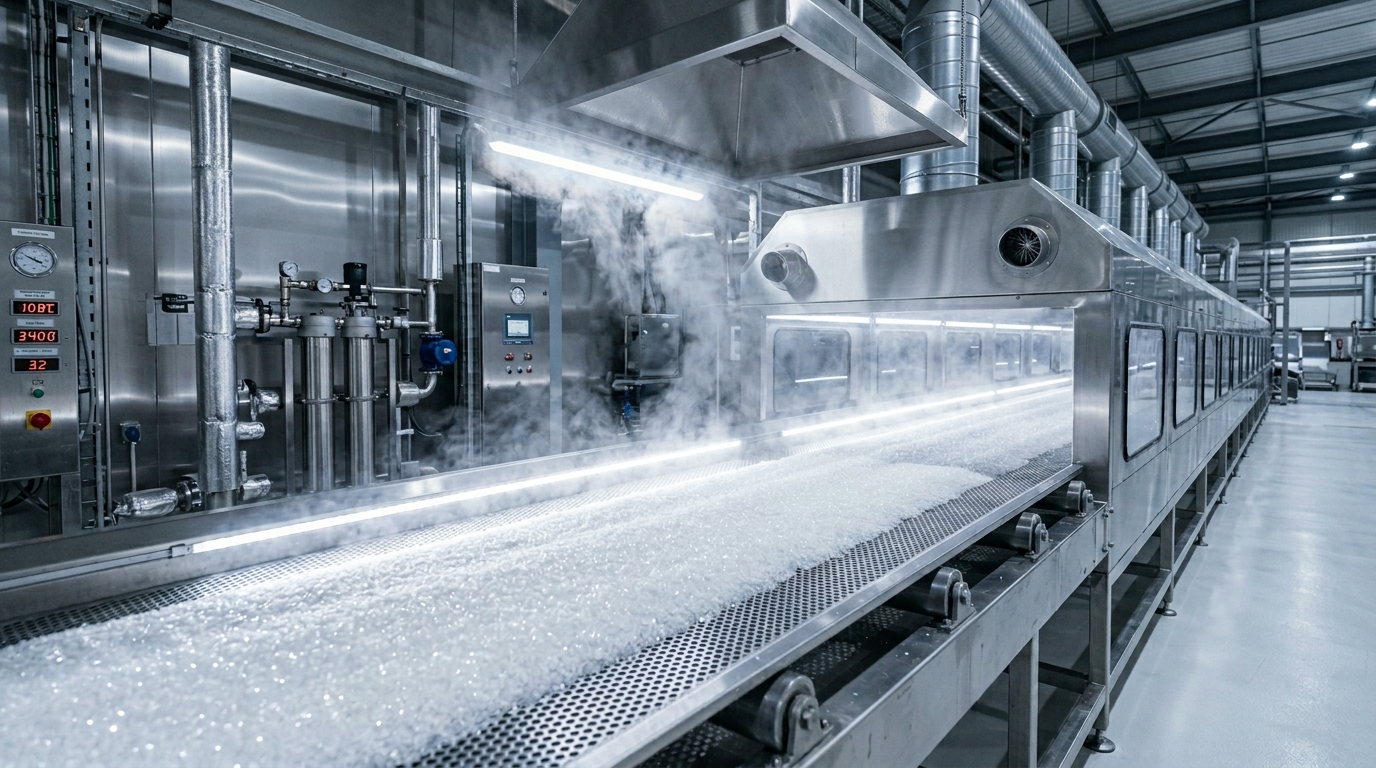
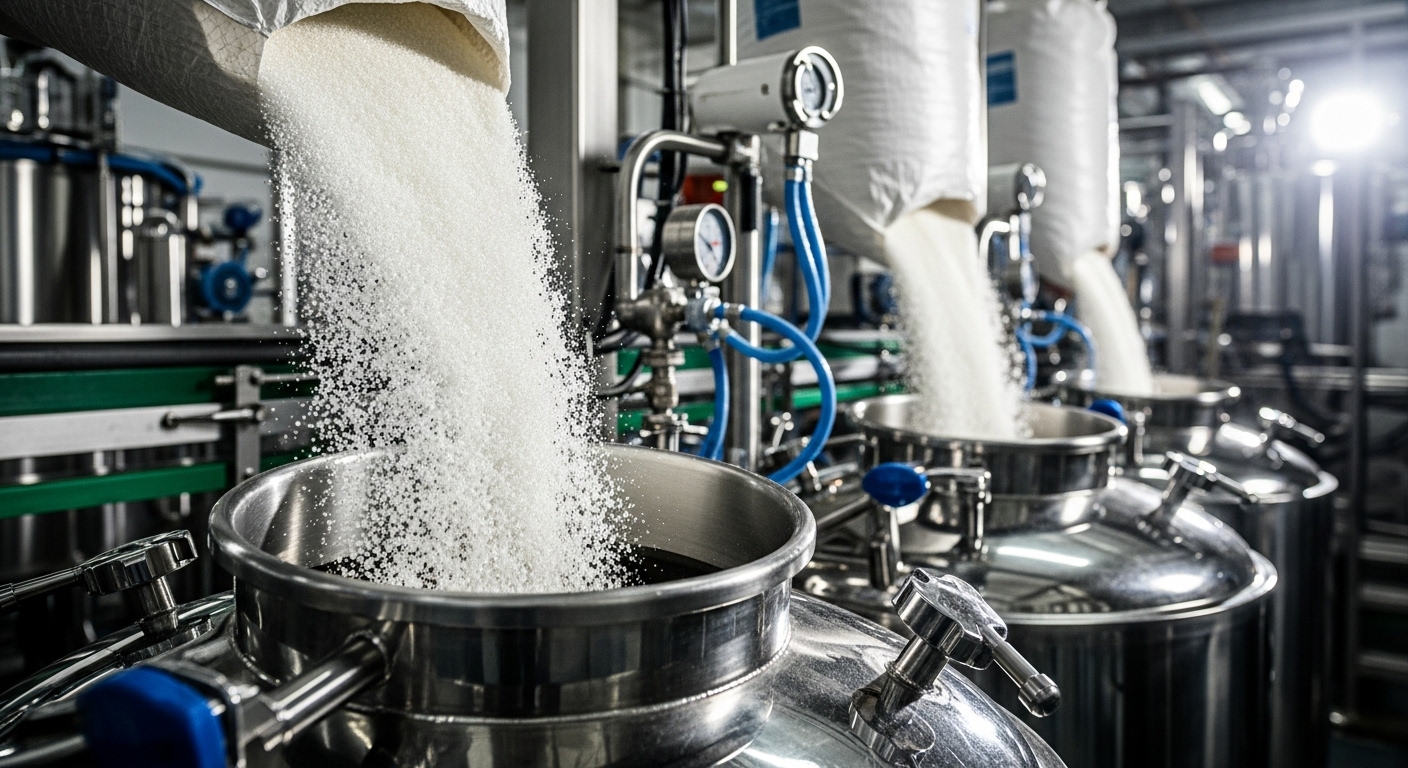
Unlike raw sugar, which can be transported in bulk and refined later, ICUMSA-45 requires careful handling, packaging, and quality control before export. This changes the entire supply chain dynamic. It introduces higher costs, tighter quality requirements, and a greater need for verification.
For importers, this means that buying ICUMSA-45 is not simply a matter of price negotiation. It is a matter of ensuring that the product delivered matches strict industrial standards. Independent inspection by firms such as SGS is not optional in serious transactions; it is a fundamental safeguard.
Export Logistics: Where Cost and Risk Converge
Brazil’s export infrastructure is sophisticated but highly concentrated. The majority of sugar exports move through Port of Santos, the largest sugar export terminal in the world, followed by Port of Paranaguá and regional ports such as Port of Maceió.
For ICUMSA-45, shipments are typically containerized rather than bulk. Sugar is packed in 50-kilogram bags or larger one-ton bags, loaded into containers, and shipped under controlled conditions. This method ensures product integrity but adds layers of cost, including bagging, container handling, and inland transport.
What many buyers underestimate is the impact of inland logistics. Transporting sugar from mills in the interior to coastal ports can significantly affect final pricing. In some cases, logistics costs account for up to a third of the landed cost, making port selection and supplier location critical strategic decisions.
Global Demand and Trade Flows
Trade data from WITS (World Bank) and United States Department of Agriculture (USDA) shows that Brazilian sugar flows primarily toward Africa, the Middle East, and Asia. Within these regions, ICUMSA-45 demand is strongest in countries that lack domestic refining capacity or require ready-to-use sugar for industrial applications.
This creates a two-tier market. On one side, large volumes of raw sugar move globally at commodity prices. On the other, smaller but more specialized flows of refined sugar command premiums and require more sophisticated supply arrangements.
Choosing the Right Contract Structure
The way a buyer structures a transaction in Brazil is just as important as selecting the supplier.
A standard purchase agreement remains the most common and practical approach. It is straightforward: the seller delivers finished ICUMSA-45 sugar according to agreed specifications, and the buyer pays under defined terms, usually through a letter of credit. This structure is efficient and suitable for most importers and manufacturers.
A tolling agreement, by contrast, represents a more advanced strategy. In this model, the buyer effectively secures processing capacity at a mill. The buyer may supply raw materials or financing, while the mill provides refining services for a fee. Ownership of the sugar remains with the buyer throughout the process.
While tolling can provide supply security and cost advantages at scale, it introduces complexity. Brazilian tax regulations, operational risks, and the need for continuous oversight make it a model best suited to large, experienced players with long-term commitments in the market.
Managing Risk in Brazilian Sugar Trade
Risk management is central to successful sourcing from Brazil. The sugar market is volatile, influenced by weather conditions, currency fluctuations, and the ongoing balance between sugar and ethanol production. When ethanol prices rise, mills often divert cane away from sugar, tightening supply.
Payment risk must also be carefully managed. New relationships should rely on secure instruments such as irrevocable letters of credit. Over time, as trust is established, more flexible arrangements may be considered.
Quality risk is mitigated through independent inspection, detailed contractual specifications, and clear dispute resolution mechanisms. Without these, even experienced buyers can face costly disputes.
Strategic Perspective for Importers and Manufacturers
Brazil offers unmatched scale and competitive pricing, but ICUMSA-45 sourcing requires a different mindset than bulk commodity trading. It is not simply about accessing supply; it is about navigating a system designed primarily for raw sugar and adapting it to refined product needs.
Successful buyers tend to share a few characteristics. They plan procurement around the harvest cycle, build relationships with reliable suppliers or traders, and pay close attention to logistics and documentation. They also understand that the lowest quoted price is rarely the lowest true cost.
For manufacturers, especially those requiring consistent quality and long-term supply, Brazil can be a powerful sourcing base. For traders, it remains a highly competitive but opportunity-rich market where expertise in structuring deals and managing risk creates real advantage.
Conclusion
Brazil’s position in the global sugar industry is unrivaled, yet its strength lies in scale rather than specialization in refined sugar. ICUMSA-45 is available, but it moves through more selective channels and requires greater diligence to secure.
For international buyers, the opportunity is clear: access to competitive supply from the world’s leading producer. The challenge lies in execution. Those who approach Brazil with a structured strategy, strong contractual frameworks, and a deep understanding of logistics and quality control will consistently outperform those who focus only on price.
Adalidda exports premium refined ICUMSA 45 sugar to leading importers and manufacturers worldwide. Sourced from top-tier refineries in Brazil, our sugar meets the highest international quality standards and is available in flexible volumes starting at 25,000 MT per month, including spot shipments. We pack to your exact specifications and manage secure, efficient, and cost-effective bulk transport. For competitive pricing, full technical documentation, and dependable long-term supply partnerships, contact our sales team today.
Bibliography
Brazil ICUMSA-45 Sugar Production, Trade & Export
Institutional & Government Sources
Companhia Nacional de Abastecimento (CONAB).
Acompanhamento da Safra Brasileira de Cana-de-Açúcar (latest editions).
https://www.gov.br/conab
→ Official production data, regional output, yield and crop forecasts.
Ministério da Agricultura e Pecuária (MAPA).
https://www.gov.br/agricultura
→ Export certification, phytosanitary requirements, and compliance framework.
United States Department of Agriculture (USDA).
Sugar Annual Report – Brazil (latest editions).
https://apps.fas.usda.gov
→ Production, export volumes, sugar vs ethanol allocation, global trade outlook.
Industry Associations & Market Intelligence
UNICA (União da Indústria de Cana-de-Açúcar).
https://unica.com.br
→ Industry statistics, milling capacity, ethanol/sugar mix trends.
CEPEA (Center for Advanced Studies in Applied Economics, ESALQ/USP).
https://www.cepea.org.br
→ Domestic sugar price benchmarks (FOB Santos), market indicators.
Trade Data & Global Market Flows
Corporate & Industry Reports
Logistics, Quality & Export Handling
SGS.
https://www.sgs.com
→ Inspection standards, certification practices for agricultural commodities.
Bureau Veritas.
https://www.bureauveritas.com
→ Quality control and pre-shipment inspection standards.
Proinde.
Loading Sugar in Brazil – Practical Guide.
https://proinde.com.br
→ Export logistics, packaging, port handling procedures.
Brazilian Port Authorities (Santos, Paranaguá, Maceió).
→ Port infrastructure, capacity, and export operations.
Legal, Trade & Contractual Framework
Brazilian Commercial Law (Código Civil Brasileiro).
SISCOMEX (Brazilian Foreign Trade System) documentation.
Brazilian Tax Framework (ICMS, PIS/COFINS, ISS).
Industry publications on tolling structures:
Brazilian ethanol and sugar processing agreements (tolling models and joint operations).
Technical Standards