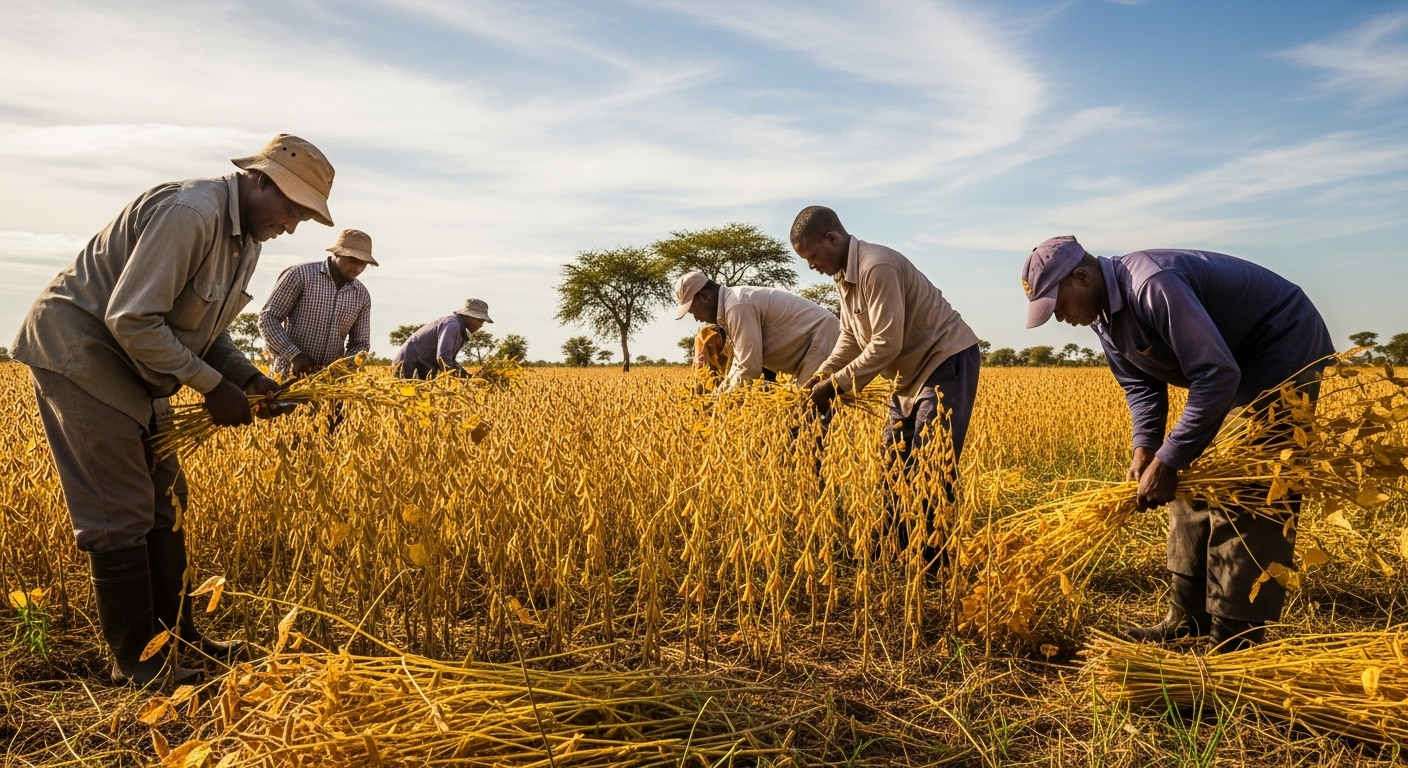
Nigeria is one of Africa’s leading soybean producers, and its unrefined (crude) soybean oil industry is expanding rapidly. Government programs (e.g. the Central Bank’s Anchor Borrowers Program) and private investment have driven soybean output into the millions of tonnes. For example, the USDA forecasts Nigeria’s soybean crush reaching 800,000 MT in 2021/22 (yielding roughly 140,000 MT of oil) as new large-scale crushers come online. Nigeria’s soybeans are grown under a strict non-GMO policy, giving its crude oil a premium niche in markets demanding identity-preserved oil. Leading local soybean processors (e.g. SALMA Oil Mills, Grand Cereals, Karma Foods, ECWA Feeds, etc.) are actively extracting oil and meal, and investments from IITA, USAID and USSEC are boosting yields and quality. Overall, Nigeria’s crude soybean oil supply is growing steadily (supported by favorable prices and farm support programs), positioning it as a viable exporter.
Technical Specifications of Nigerian Crude Soybean Oil
Nigerian crude soybean oil closely matches global quality norms. By composition, it is a light amber liquid with very low saturated fats and no trans fats. Under Nigerian food regulations, pure soybean oil must have an iodine value of about 120–143 and an acid value ≤0.6 mg KOH/g (reflecting very low free fatty acids). In practice, freshly extracted crude soybean oil typically has acid values up to about 2–3 mg KOH/g (≈1–1.5% FFA) and an iodine value in the range 125–130, consistent with international data. Its density is around 0.919–0.925 (20 °C), refractive index ~1.467 (40 °C), saponification value ~189–195, and peroxide value is normally kept under 10 meq O₂/kg for freshness. Moisture is very low (<0.2%) and insoluble impurities <0.05%. Nutritionally, soybean oil is rich in unsaturated fatty acids – roughly 50–55% linoleic (C18:2), ~20–25% oleic (C18:1), with about 10–11% palmitic (C16:0) and 3–4% stearic (C18:0) acids. This high polyunsaturate content (and vitamin E/phyto-sterols) gives it a clear, liquid appearance and desirable nutrition profile. Crude color is darker than refined oil (typically around 30–45 on the Lovibond color scale), but this is normal for unrefined oil and can be removed by bleaching if needed. In short, Nigerian crude soybean oil meets or exceeds standard edible-oil specs (iodine, FFA, peroxide, etc.) and has the same fatty-acid profile as soybean oil worldwide.
Applications Across Key Industries
Food Processing: Crude soybean oil is a versatile edible oil once refined. It has a high smoke point and neutral flavor, making it ideal for deep frying and cooking. It is used in margarine and shortening production and in baked foods. Its low saturated fat and no cholesterol content make it a “heart-healthy” vegetable oil. (Replacing saturated fats with soybean oil is known to lower LDL cholesterol and reduce cardiac risk) Because of its balanced fatty acids, many food manufacturers use or blend soy oil in noodles, snack foods, sauces and prepared meals.
Cosmetics and Personal Care: Soybean oil is valued as a skin-friendly emollient. It quickly penetrates the skin without greasiness, moisturizing and “plumping” underlying cells for a smoother appearance. Its natural vitamin E content provides antioxidant benefits (anti-aging, UV protection), so it is often added to lotions, sunscreens and anti-wrinkle creams. It also appears in hair-care products and massage oils because it spreads easily and adds shine.
Pharmaceuticals & Nutraceuticals: Because soybean oil is pure lipid, it is widely used as a pharmaceutical excipient. It is used in parenteral (IV) nutrition as a calorie-dense, essential-fatty-acid source for patients. It is also a common oil fill for soft-gel capsules and tablets, ensuring uniform dosage of active ingredients. In these applications, crude oil would normally be degummed and refined under pharmaceutical standards, but its basic profile is ideal for human-safe formulations.
Animal Feed: In feed rations, soybean oil provides a dense energy supplement. Adding even a few percent soy oil to poultry, swine or aquaculture feed increases calories and palatability. Studies show animals fed with soybean-oil-enriched diets gain weight faster than on oil-free diets. (The leftover soybean meal after oil extraction is also a high-quality protein feed, making the soybean crush extremely valuable overall.) Nigeria’s soybean oil can thus be marketed to feed companies and fish/poultry farms either as crude or after minimal refining.
Biofuels and Industrial: Globally, soybean oil is the top biodiesel feedstock. In the U.S., for example, about 30–50% of domestic soybean oil goes into biodiesel, and worldwide roughly 90% of biodiesel is made from soy or similar oils. Crude soybean oil can be esterified into biodiesel or renewable diesel, providing a renewable energy source that cuts greenhouse emissions. It is also used in paints, varnishes, inks and lubricants (as a non-petroleum oil), in resins and surfactants, and in soaps. Nigerian crude oil can meet these industrial demands either directly or after degumming and minimal refining.
Regulatory and Health Aspects
Importers of Nigerian crude soybean oil must ensure it meets health and safety regulations. For food-grade uses, oils must comply with Codex/EU/National limits on pesticides, heavy metals, aflatoxins, etc. Nigerian standards forbid contamination: by law, edible oils may contain no heavy metals, petroleum residues, foreign matter or rancidity. Crude soybean oil destined for food is usually degummed, neutralized and bleached to remove gums and impurities. Its naturally low saturated fat and zero cholesterol content make it a healthy oil choice – health authorities note that replacing saturated fats with polyunsaturated oils (like soybean oil) significantly reduces heart disease risk. Non-GMO status means the oil faces fewer regulatory hurdles in markets with strict GMO restrictions (for example, it can be exported to the EU or Japan without GM labeling). Importers should require a Certificate of Analysis confirming compliance (FFA, moisture, peroxides, etc.) and possibly a phytosanitary certificate. In short, crude Nigerian soy oil is generally safe and healthful – as long as it is handled and refined under standard food-oil protocols, it easily meets global edible-oil quality requirements.
Competitive Advantages of Nigerian Supply
Non-GMO Identity: Nigeria only cultivates non-genetically-modified soybeans, giving its crude oil a niche in markets demanding GMO-free oil (e.g. certain EU buyers, health-conscious consumers). This non-GMO attribute is a unique selling point globally.
Growing Availability: With domestic soybean production and processing expanding, Nigeria can offer large, consistent volumes. New crushing plants (many supported by private investors and donor programs) are steadily increasing the crush capacity. Government programs (e.g. Anchor Borrowers) have facilitated record planting, so the country’s oilseed supply is on a long-term upward trend.
Cost Competitiveness: A weaker naira has effectively reduced Nigerian export prices in foreign-currency terms. In 2023 Nigeria’s agricultural export values jumped 48% largely due to currency devaluation, making its soybean products especially price-competitive. Lower local labor and land costs (compared to many exporting countries) also help Nigeria offer attractive pricing.
Regional Trade Agreements: Nigeria’s membership in ECOWAS and the African Continental Free Trade Area provides duty-free access to many African markets. (For example, crude oils enjoy low or zero tariffs within ECOWAS.) Nigeria also has duty-free access to the US under AGOA for many agricultural goods (though oils have limited coverage). Proximity to Europe across the Atlantic further opens export routes. In sum, Nigeria is well-placed to serve both African neighbors and distant markets under favorable trade terms.
Quality and Sustainability: Nigerian soy farmers use relatively low pesticide inputs, and the industry is embracing international certifications (ISO, HACCP, etc.) to reassure buyers. Buyers can brand Nigerian soy oil as “sustainably grown non-GMO oil from West Africa,” which can command premiums in certain segments. All these factors together – expanding production, supportive policies, and unique non-GMO status – give Nigerian crude soybean oil a solid competitive edge on the export market.
Top 20 Global Export Markets for Crude Soybean Oil
Crude soybean oil is traded worldwide. In 2023 the leading importers (by value) included India, Morocco, Peru, the EU, China and others. The table below lists 20 high-potential markets (countries plus EU region) with their 2023 import value and volume, along with key industry drivers and why Nigerian oil could fit:
India – $4.014 billion (3.497 million t). India is by far the largest importer of crude soy oil, driven by its huge edible-oil and poultry/feed demand. It recently cut import duties on crude oils to ease shortages. Nigerian oil (non-GMO, high quality) can help supply cooking oil and feedstock to India’s food and biodiesel sectors.
China – $0.434 billion (0.382 million t). China is a massive oil importer. While China mostly uses palm and rapeseed, it also imports soy oil for seasoning and potential biofuel. Nigerian soy oil could be an alternative source for Chinese vegetable oil refiners (especially for niche non-GMO market segments).
Egypt – $0.339 billion (0.291 million t). Egypt has large food and poultry feed sectors that consume huge oil volumes (palm and sunflower are top, but soy is an important import). Nigeria can serve Egypt’s market through Mediterranean ports; its non-GMO soy oil may fetch a premium in health-conscious segments.
Pakistan – $0.248 billion (0.206 million t). Similar to India, Pakistan’s population and livestock sectors require ample vegetable oil. Pakistani refiners could blend Nigerian crude soy oil into the local cooking-oil mix (especially since Pakistan also allows duty-free imports under certain agreements).
Zimbabwe – $0.212 billion (0.156 million t). Zimbabwe’s local vegetable oil industry has faltered, making it heavily import-dependent. Nigeria can tap this market via regional trade, offering crude oil at competitive prices to Zimbabwean soap, cooking oil and feed producers.
Poland – $0.205 billion (0.229 million t). As an EU member, Poland imports oilseeds and oils for edible use and biofuel. Nigeria’s non-GMO oil must meet EU standards (which it can), and could supply specialty demands (e.g. health foods) as well as general refining.
Netherlands – $0.166 billion (0.540 million t). The Netherlands is a major EU trading hub for oils. Dutch refiners import crude oils (including soy) and re-export value-added products. Nigerian crude oil could enter Netherlands refineries for blending or direct re-export to EU or Africa, leveraging Europe’s well-developed distribution.
Spain – $0.131 billion (0.159 million t). Spain imports vegetable oils for cooking and industrial use. Nigerian soy oil could find a market in Spanish food manufacturing (e.g. margarine, baking) and in local biodiesel plants, especially if trade duties (through EU agreements) make it cost-effective.
Italy – $0.080 billion (0.072 million t). Italy uses imported soy oil in pasta sauces, bakery fats, and biodiesel. Nigerian crude oil could enter Italian refineries (via Mediterranean shipping) and compete with Black Sea and American oils, especially given its quality and competitive pricing.
Mozambique – $0.042 billion (0.574 million t). Uniquely, Mozambique’s crude import volume is huge (574,000 t) despite moderate value, because it uses soy oil extensively (mainly for food industry and animal feed). Nigeria can easily serve Mozambique through regional maritime routes; its oil would fit local demand for edible oil and industrial uses, leveraging the low tariff within Southern African trade.
Each of these markets presents a potential outlet for Nigerian crude soybean oil. In all cases, Nigeria’s oil can be marketed on its merits (composition and price) and through trade linkages (shipping routes, trade agreements). As global soybean oil demand continues growing, Nigeria’s expanding production and its non-GMO/low-cost attributes could gain traction in these top import markets.
Deko Group supplies bulk crude soybean oil to manufacturers worldwide. We offer shipment sizes starting at 15,000 MT, packed in 24,000 L flexitanks for safe, cost-efficient transport. For competitive quotations, specifications (COA, spec sheet) and long-term supply agreements, please contact our sales team.
Bibliography (APA 7th ed.)
Codex Alimentarius Commission. (2015). Standard for named vegetable oils (CODEX STAN 210-1999, Rev. 2015). Food and Agriculture Organization of the United Nations. Retrieved November 2, 2025, from https://www.fao.org/input/download/standards/336/CXS_210e_2015.pdf
Federal Ministry of Agriculture and Food Security (FMARD), Federal Republic of Nigeria. (2025, July 23). FG launches National Soyabean Production Policy and Strategy to achieve food sovereignty, economic diversification and job creation (press release). Retrieved November 2, 2025, from https://fmino.gov.ng/fg-launches-national-soyabean-production-policy-and-strategy-to-achieve-food-sovereignty-others/
Food and Agriculture Organization (FAO). (n.d.). Chapter 1: The soybean — lipids and composition (FAO corporate resources). Retrieved November 2, 2025, from https://www.fao.org/4/t0532e/t0532e02.htm
National Agency for Food and Drug Administration and Control (NAFDAC). (2019). Fats and oils regulations 2019 (Regulatory guidance). Retrieved November 2, 2025, from https://www.nafdac.gov.ng/wp-content/uploads/Files/Resources/Regulations/FOOD_REGULATIONS/Fats-and-Oils-Regulations-2019.pdf
Standards Organisation of Nigeria (SON). (2005). Catalogue of Nigerian Standards (SON publication). Retrieved November 2, 2025, from https://www.arso-oran.org/wp-content/uploads/2014/09/Catalogue-of-Nigerian-Standards-2005.pdf
United States Department of Agriculture, Foreign Agricultural Service (USDA FAS), Lagos. (2024, April 17). Oilseeds and Products Annual — Nigeria (Report: NI2024-0006). Retrieved November 2, 2025, from https://apps.fas.usda.gov/newgainapi/api/Report/DownloadReportByFileName?fileName=Oilseeds+and+Products+Annual_Lagos_Nigeria_NI2024-0006.pdf
World Bank / World Integrated Trade Solution (WITS) — based on UN Comtrade. (2023). Crude soya-bean oil (HS 150710) — import data (country and world tables). Retrieved November 2, 2025, from
• World importers (2023): https://wits.worldbank.org/trade/comtrade/en/country/ALL/year/2023/tradeflow/Imports/partner/WLD/product/150710
• Nigeria imports (2023): https://wits.worldbank.org/trade/comtrade/en/country/NGA/year/2023/tradeflow/Imports/partner/ALL/product/150710
Central Bank of Nigeria (CBN). (2023). List of 43 items restored to official FX market (circular / PDF). Retrieved November 2, 2025, from https://www.cbn.gov.ng/Out/2023/CCD/List%20of%2043%20Items.pdf
PM News Nigeria. (2025, January 18). AfDB calls for more efforts to boost food production in Nigeria (coverage of CSS Global refinery inauguration). Retrieved November 2, 2025, from https://pmnewsnigeria.com/2025/01/18/afdb-calls-for-more-efforts-to-boost-food-production-in-nigeria/
TechnoServe. (2022). Edible Oil Study — The opportunity for oil fortification with local production (full report). Retrieved November 2, 2025, from https://www.technoserve.org/wp-content/uploads/2022/08/Edible-Oil-Study_Full-Report.pdf
LGC Standards / Analytical Services. (n.d.). Edible oil & fat analysis — soybean oil (methodology and reference materials). Retrieved November 2, 2025, from https://www.lgcstandards.com/BM/en/Edible-Oil-Fat-analysis-in-soybean-oil/p/PT-FC-778SBO
United States Department of Agriculture (USDA) — FoodData Central. (n.d.). Food and nutrient data for soybean oil (composition reference). Retrieved November 2, 2025, from https://fdc.nal.usda.gov/
Mozaffarian, D., Micha, R., & Wallace, S. (2010). Effects on coronary heart disease of increasing polyunsaturated fat in place of saturated fat: A systematic review and meta-analysis of randomized controlled trials. PLOS Medicine, 7(3), e1000252. https://doi.org/10.1371/journal.pmed.1000252
Sacks, F. M., Lichtenstein, A. H., Wu, J. H. Y., Appel, L. J., Creager, M. A., Kris-Etherton, P. M., … & Van Horn, L. (2017). Dietary fats and cardiovascular disease: A presidential advisory from the American Heart Association. Circulation, 136(3), e1–e23. https://doi.org/10.1161/CIR.0000000000000510
U.S. Soybean Export Council (USSEC). (2024, December 16). Codex standard for high-oleic soybean oil established (news). Retrieved November 2, 2025, from https://ussec.org/news/codex-standard-for-high-oleic-soybean-oil-established/