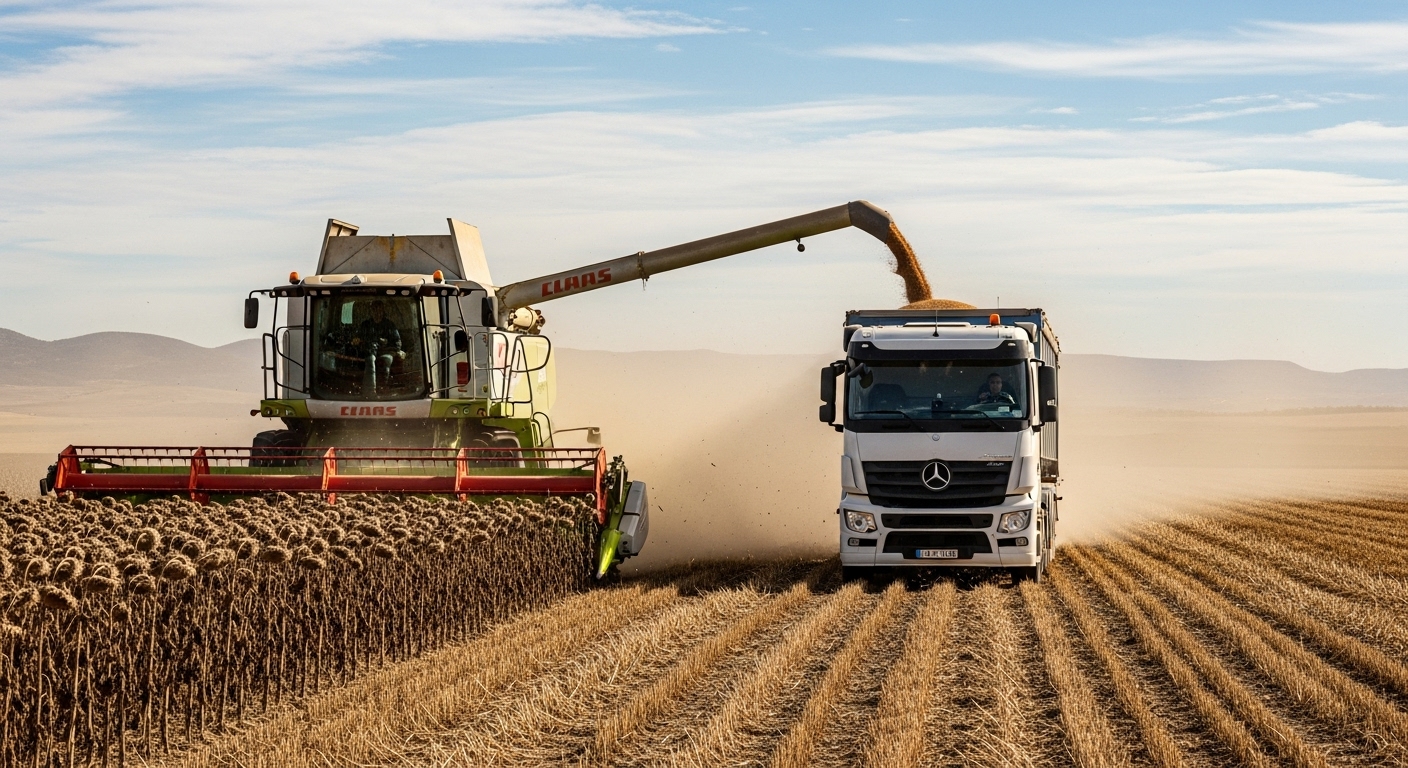
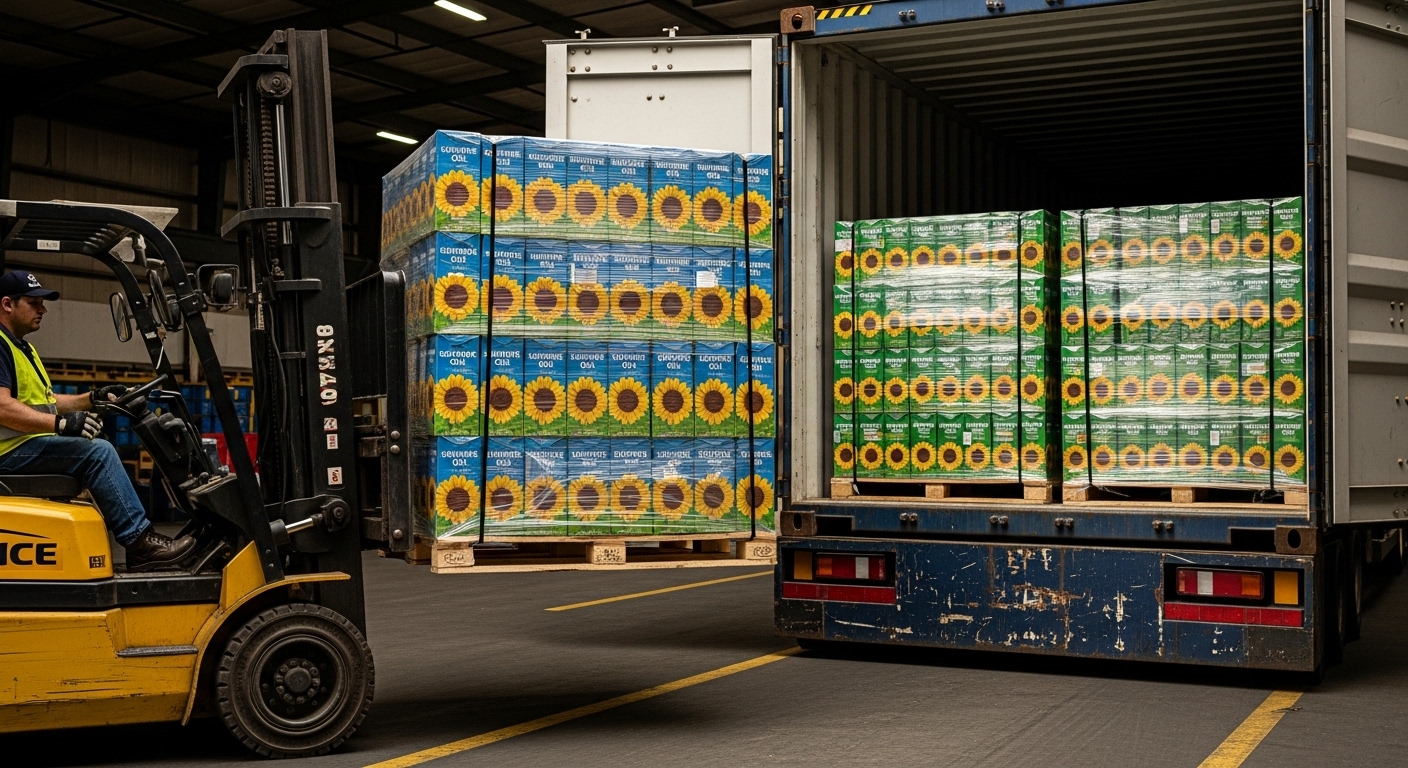
Refined sunflower oil is one of the most widely consumed vegetable oils in the world, prized for its light taste, versatility, and high nutritional value. Extracted from sunflower seeds and refined to remove impurities, it is used in cooking, frying, baking, and food manufacturing. High-oleic variants of sunflower oil, with a favorable fatty acid profile, are particularly valued for their heart-health benefits and frying stability.
While countries like Ukraine, Russia, and Turkey dominate global sunflower oil exports, new origins such as Spain, Colombia, Brazil — and increasingly South Africa — are developing their refining industries and exploring international markets. Each of these countries presents a different profile in terms of production capacity, infrastructure, and export potential.
Spain: Europe’s Refining Hub for Sunflower Oil
Spain is the most advanced among the three countries in sunflower oil production and refining. It produces a significant amount of sunflower seeds domestically, though not enough to meet total national demand. To bridge this gap, Spain imports large volumes of sunflower seed and crude oil from countries such as Ukraine and Argentina.
The country’s refining infrastructure is well developed. Several major Spanish companies operate large-scale facilities with a combined refining capacity reaching into hundreds of thousands of tonnes annually. These refineries process both domestic and imported crude oil, producing refined sunflower oil for household, food-service, and industrial use.
Spain also benefits from modern logistics, ports, and road networks that connect it efficiently to the rest of Europe, North Africa, and West Africa. With its strong compliance with EU quality and traceability standards, Spain is a competitive exporter of refined sunflower oil. It also has the potential to expand in premium segments such as organic and high-oleic sunflower oil, where European consumers are willing to pay a higher price for verified sustainability and health benefits.
However, Spanish producers face tough competition from lower-cost origins, especially Ukraine and Turkey, which continue to dominate bulk sunflower oil supply. To stay competitive, Spain’s opportunity lies in differentiating its exports through certification, quality, and branding, rather than volume alone.
Colombia: A Refining and Bottling Hub in the Making
Colombia’s relationship with sunflower oil is quite different. Domestic sunflower seed production is minimal, and the country depends almost entirely on imports of crude or refined sunflower oil to meet local demand. Local processors typically refine imported crude oil or repackage imported refined oil for the retail market.
Despite limited upstream production, Colombia has a strong position as a regional logistics and manufacturing hub in Latin America. Its refineries and bottling plants are efficient, and the country enjoys trade connections throughout Central and South America. This means Colombia could evolve into a regional distribution center for refined sunflower oil, importing bulk crude oil from major exporters such as Argentina or Spain, refining and bottling it locally, and re-exporting it to nearby markets like Ecuador, Peru, and Panama.
To realize this potential, Colombian processors must secure reliable long-term supply contracts and maintain competitive production costs. Investing in modern packaging lines, non-GMO certification, and private-label partnerships could make Colombia a value-added player in the regional sunflower oil trade, even without large domestic seed cultivation.
Brazil: Small Production, Growing Potential
Brazil’s sunflower oil industry remains small compared to its vast soybean and palm oil sectors. Sunflower is a minor crop in Brazil, though production has gradually increased in recent years. Only a few regional crushers currently process sunflower seed, and most major agribusinesses focus on soy.
Despite this, Brazil’s strong agricultural infrastructure and logistics create opportunities for future expansion. The country has the technical expertise, export facilities, and agronomic conditions to grow more sunflower and scale refining over time. If Brazil increases seed production and invests in processing plants, it could emerge as a competitive regional supplier of refined sunflower oil, particularly in niche markets such as organic and high-oleic oils.
For now, Brazil is mostly a domestic consumer of sunflower oil. Its exports remain limited, but the foundation is there for gradual growth, especially if farmers adopt sunflower as a rotation crop and refiners pursue higher-value products for international buyers.
South Africa: Regional Supplier with Significant Crushing Capacity and Export Reach
South Africa is an important sunflower producer in southern Africa and has a well-established crushing and refining industry that serves domestic demand and neighbouring markets. Sunflower seed is a major oilseed in local crop rotations, and a large share of the seed crop is destined for crushing to produce edible oil and oilcake (meal) for animal feed. In marketing year 2023/24 South Africa crushed roughly 2.6 million tonnes of oilseeds overall, with sunflower seed an important component of that crushing activity.
Annual sunflower seed harvests in South Africa typically range in the several-hundred-thousand-tonnes band (estimates around ~0.6–0.7 million tonnes in recent seasons), though harvests and oil yields can swing significantly with weather; the 2023/24 season was hit by drought and lower yields in many regions. These seasonal swings mean refiners alternate between relying on local seed and importing crude oil when domestic crush volumes fall.
South Africa also exports refined sunflower oil and supplies neighbouring SADC markets. Regional export flows and growing local crushing capacity have reduced the need for imports in many years; when capacity is running full, South African refiners supply Botswana, Namibia, Lesotho and other nearby buyers with refined oil and packaged consumer brands. In recent trade data, refined sunflower oil exports from South Africa were reported at notable values (for example, export revenues in recent years have been reported in the tens of millions of USD), illustrating real regional demand for locally refined product.
Opportunities for South African exporters include supplying the SADC region with competitively priced refined bulk and retail-packed oils, developing value-added consumer brands for Southern Africa, and leveraging the strong local crushing infrastructure to produce sunflower oil with traceability and quality credentials. Constraints include weather-driven yield volatility (El Niño/drought risk), competition for crushing capacity from soy and other oilseeds, and the economics of exporting beyond nearby markets where freight and tariffs reduce competitiveness.
Global Demand and Leading Importers
The global trade in refined sunflower oil has grown steadily, driven by rising health awareness and demand for vegetable oils with better nutritional profiles. Major importers include countries in Europe such as Belgium, France, Germany, and Italy, along with growing markets in the Middle East, Central Asia, and the Americas.
The United States, for example, imports substantial volumes of refined sunflower oil, mostly from Ukraine, Turkey, and Mexico. In South America, Chile and Mexico are notable importers, often sourcing from Argentina or Ukraine. Gulf states such as the United Arab Emirates and Saudi Arabia also represent promising destinations due to their high consumption of cooking oil and expanding food manufacturing industries.
For Spain, these regions represent key export markets for both bulk refined oil and branded consumer products. Colombia and Brazil, though smaller players, could find regional opportunities in neighboring Latin American markets through efficient packaging and competitive pricing.
Market Access, Tariffs, and Sustainability
Trade in refined sunflower oil is influenced by tariffs, certification requirements, and consumer trends. In the European Union, tariffs are low and trade is open within the bloc, giving Spain a structural advantage. In contrast, India imposes high import duties to protect its domestic edible oil industry, making that market challenging for most exporters. The United States maintains moderate import tariffs, and some neighboring countries enjoy preferential rates through trade agreements.
Sustainability certification has become increasingly important. The International Sustainability and Carbon Certification (ISCC) system is recognized across Europe and ensures traceability and responsible production. Organic and non-GMO certifications are also valuable, especially for premium markets in Europe and North America. Companies that invest in certified, traceable production have greater access to high-value buyers and retailers.
Consumer Trends and Health Benefits
Sunflower oil consumption is rising worldwide as consumers seek healthier cooking oils. Refined sunflower oil is low in saturated fats and high in unsaturated fats, particularly linoleic and oleic acids, which are known to support cardiovascular health. It is also rich in vitamin E, a natural antioxidant that protects cells from damage.
High-oleic sunflower oil varieties are especially prized for their stability and heart-health profile. The U.S. Food and Drug Administration has even recognized that replacing saturated fats with high-oleic sunflower oil may reduce the risk of heart disease.
In terms of consumer behavior, demand is increasingly shaped by the search for clean-label, non-GMO, and organic products. Sunflower oil fits this trend well because it is naturally trans-fat-free, neutral in flavor, and adaptable across cooking and food-processing applications. Premium packaging, transparent labeling, and sustainability messaging are key marketing levers for exporters entering competitive retail markets.
Opportunities and Outlook
Spain is well-positioned to strengthen its role as a Mediterranean hub for refined sunflower oil exports. Its combination of technical expertise, EU quality standards, and efficient logistics gives it a solid base to reach markets in Europe, North Africa, and the Middle East.
Colombia, though lacking seed production, can evolve into a strategic bottling and distribution center for imported crude oil, leveraging its regional trade links. With modest investment, it could serve as a gateway for branded and private-label sunflower oil across Latin America.
Brazil’s potential lies in diversification. By expanding sunflower cultivation and refining capacity, Brazil could gradually position itself as a regional supplier of specialty sunflower oils, benefiting from its agricultural scale and export experience.
South Africa can build on its crushing and refining base to continue serving the southern African market and potentially expand into other nearby markets when logistics and pricing are favourable. Addressing yield volatility through improved seed varieties, irrigation and agronomic practices—alongside investments in value-added packaging and sustainability credentials—would strengthen South Africa’s export proposition.
Across all four countries, exporters can benefit from the global trend toward health-conscious consumption, transparent sourcing, and sustainably certified oils. The long-term outlook for refined sunflower oil remains positive, supported by steady global demand, changing dietary habits, and the search for healthier vegetable oils.
AvecAfrica supplies high-quality refined soybean oil to importers and food manufacturers around the world. We offer flexible shipment volumes starting from 10 containers per month, with packaging options including 1L bottles, 5L bottles, 25L jerrycans, or custom packaging tailored to your requirements ensuring safe and cost-efficient transport. For competitive quotations, detailed product specifications (COA and spec sheet), or to discuss long-term supply partnerships, please contact our sales team.
Bibliography
1. International and Global Sources
• Food and Agriculture Organization of the United Nations (FAO). FAOSTAT: Crops and Livestock Products – Sunflower Seed and Oil Data, 2023. Rome: FAO. https://www.fao.org/faostat
• International Trade Centre (ITC). Trade Map – Refined Sunflower Oil (HS Code 151219) Trade Statistics, 2024. Geneva: ITC. https://www.trademap.org
• United Nations Comtrade Database. International Trade Statistics for Refined Sunflower Oil (HS 151219), 2024. https://comtrade.un.org
• OECD–FAO. Agricultural Outlook 2024–2033. Paris: OECD Publishing, 2024.
• World Bank. Commodity Markets Outlook, April 2024. Washington, D.C.: World Bank Group.
2. Spain
• Ministerio de Agricultura, Pesca y Alimentación (MAPA), Spain. Informe del Sector Oleaginoso 2024. Madrid: Government of Spain.
• Asociación Nacional de Industriales Envasadores y Refinadores de Aceites Comestibles (ANIERAC). Annual Report 2024: Sunflower Oil Refining and Consumption Trends.
• European Commission. EU Agricultural Outlook for Markets and Income 2024–2034. Brussels: EC Directorate-General for Agriculture and Rural Development.
• Spanish Oilseed Processors Association (AEPLA). Sunflower Oil Refining Capacity and Export Statistics 2023.
3. Colombia
• Ministerio de Agricultura y Desarrollo Rural (MADR). Informe del Sector de Oleaginosas 2024. Bogotá: MADR.
• Federación Nacional de Cultivadores de Cereales y Leguminosas (FENALCE). Producción y Comercialización del Aceite de Girasol Refinado en Colombia, 2024.
• ProColombia. Agroexportaciones de Aceites Vegetales – Oportunidades Internacionales, 2024. Bogotá: ProColombia.
• FAO Colombia Country Report. Oilseed Development and Food Industry Integration, 2023.
4. Brazil
• Companhia Nacional de Abastecimento (CONAB). Boletim da Safra de Girassol e Derivados 2024. Brasília: CONAB.
• Associação Brasileira das Indústrias de Óleos Vegetais (ABIOVE). Brazilian Vegetable Oil Industry Report 2024. São Paulo: ABIOVE.
• Ministério da Agricultura e Pecuária (MAPA). Panorama do Setor de Oleaginosas e Biodiesel 2024. Brasília: MAPA.
• Brazilian Trade and Investment Promotion Agency (ApexBrasil). Export Opportunities for Refined Sunflower Oil, 2023.
5. Sustainability, Health, and Consumer Trends
• International Sustainability and Carbon Certification (ISCC). Certification System for Sustainable Bio-based and Food Products, 2024.
• European Food Safety Authority (EFSA). Scientific Opinion on Sunflower Oil Nutrition and Safety, 2023. Parma: EFSA Journal.
• World Health Organization (WHO). Dietary Fats and Fatty Acids in Human Nutrition: Report of an Expert Consultation, 2023. Geneva: WHO.
• Mordor Intelligence. Global Sunflower Oil Market Report 2024 – Trends, Growth, and Forecasts (2024–2029).
• Statista. Sunflower Oil Consumption and Market Growth by Country, 2024.
• Research and Markets. Global Edible Oil Industry Report, 2024.
6. South Africa
• Department of Agriculture, Land Reform and Rural Development (DALRRD). Crop Estimates Committee Report: Sunflower Seed Production and Utilization 2024. Pretoria: Government of South Africa.
• Bureau for Food and Agricultural Policy (BFAP). Baseline Agricultural Outlook 2024–2033: Oilseeds and Edible Oils in South Africa. Pretoria: BFAP.
• National Agricultural Marketing Council (NAMC). South African Sunflower Seed and Vegetable Oil Market Trends Report 2024. Pretoria: NAMC.
• United States Department of Agriculture (USDA) Foreign Agricultural Service. South Africa Oilseeds and Products Annual 2024 (Report No. SF2024-0011). Washington, D.C.: USDA FAS.
• International Trade Centre (ITC). Trade Map – Refined Sunflower Oil (HS Code 151219): South Africa Export Statistics, 2024. Geneva: ITC. https://www.trademap.org