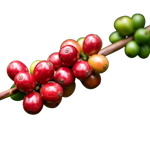
Vietnamese coffee has become one of the most important origin stories in the global coffee trade. For importers, roasters, soluble coffee producers, and manufacturers, Vietnam offers something rare: large and consistent supply, strong export infrastructure, competitive pricing, and growing opportunities in value-added products. At the same time, the market is changing quickly. Climate pressure, tree renewal, traceability requirements, and sustainability standards are shaping the next phase of the industry.
Why Vietnamese coffee matters
Vietnam is the world’s second-largest coffee producer and the largest producer of robusta. The country produces around 30 million 60-kg bags of coffee a year, with robusta representing the overwhelming majority of output. Coffee cultivation is concentrated in the Central Highlands, especially Đắk Lắk, Lâm Đồng, Đắk Nông, Gia Lai, and Kon Tum. These regions account for most of the country’s coffee area and production, making Vietnam one of the most strategically important coffee origins in the world.
For buyers, this matters because Vietnam can supply volume at scale. For manufacturers, it matters because Vietnamese robusta is a key ingredient in espresso blends, instant coffee, spray-dried and freeze-dried products, and increasingly in specialty and premium blend applications.
Production profile
Vietnam’s coffee sector is dominated by smallholders. Most farms are under 2 hectares, and coffee remains a livelihood base for millions of rural workers. This smallholder structure gives the sector flexibility and resilience, but it also means that quality, sustainability, and supply consistency depend heavily on farmer training, inputs, irrigation, and coordination with collectors and exporters.
Robusta is the heart of the industry. Arabica remains a much smaller share of output, though it is gaining attention in high-altitude areas and in specialty programs. The government and industry groups have also been encouraging replanting, better farm management, water-saving irrigation, and improved varieties to support long-term productivity.
Recent forecasts show production staying strong, with output supported by high international prices and better farmer investment. That said, the industry is still vulnerable to weather shocks and land-use changes as some farmers diversify into crops such as durian or pepper when returns from coffee weaken.
What Vietnamese coffee is used for
Vietnam is best known for robusta, and that is exactly what many global buyers need.
Robusta from Vietnam is widely used in:
espresso blends
instant coffee
3-in-1 coffee products
cold brew bases
commercial foodservice programs
price-sensitive private-label products
blending programs that need body, crema, and caffeine strength
This makes Vietnam especially important to manufacturers. As arabica prices rise globally, many roasters and brands are increasing robusta inclusion in blends. Vietnamese robusta is therefore not only a low-cost option; it is becoming a strategic blend component.
Export performance and top markets
Vietnam exports the vast majority of its coffee crop, and export earnings have reached record levels in recent years due to strong prices and healthy demand. Major export destinations include Germany, Italy, the United States, Belgium, Japan, Spain, Russia, the United Kingdom, Algeria, and South Korea.
Europe remains the largest market block, with Germany and Italy among the top destinations. The United States is also a major buyer, especially for soluble coffee and blends. Meanwhile, Asian markets such as China, Korea, the Philippines, and Indonesia are expanding quickly.
This matters for importers because it shows broad and stable demand. It also shows that Vietnamese coffee is accepted across highly demanding markets with different quality and compliance rules.
Quality and processing
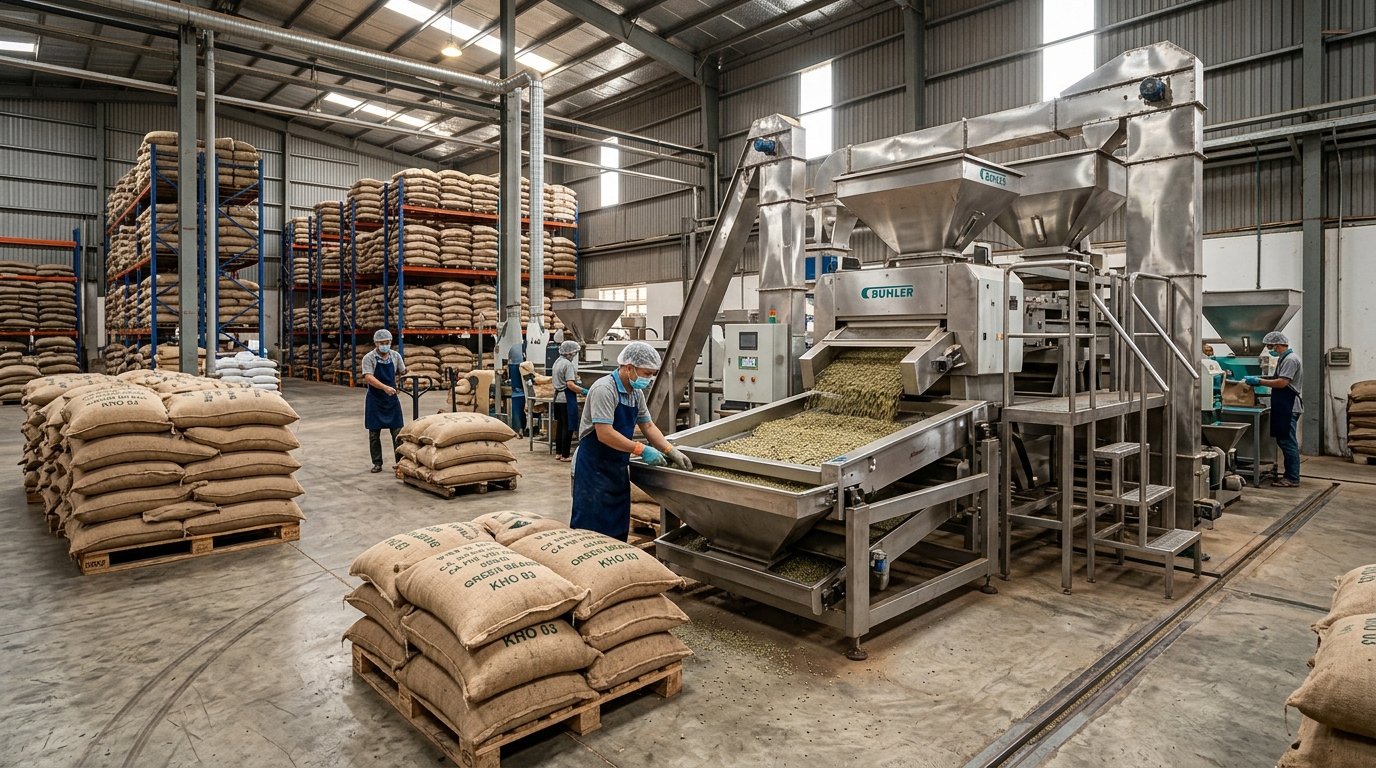
Vietnamese coffee is no longer just about volume. The country has made major progress in grading, processing, and export standards. Most coffee is exported as green bean, but roasted, ground, instant, and soluble coffee are growing fast. This is important for manufacturers seeking both raw material and finished-product partnerships.
Robusta is commonly dry-processed, which produces a stronger, earthier cup profile. Arabica is more often wet-processed. Export standards usually focus on moisture level, defect count, screen size, packaging, and cleanliness. For buyers, this means that Vietnamese coffee can be sourced in clearly defined commercial grades, with higher-end lots available for more specialized use.
There is also increasing interest in fine robusta and specialty arabica. These segments are still small, but they represent an important shift in how the origin is perceived internationally.
Challenges facing the sector
Vietnamese coffee has strong fundamentals, but buyers should understand the main risks.
Climate change is the biggest long-term challenge. Drought, heat waves, and irregular rainfall are affecting yields and water availability in the Central Highlands. Farms with irrigation and shade systems perform better, while exposed plots face greater stress.
Aging trees are another issue. Many coffee trees are now in or beyond their peak productive age, and replanting requires investment and time. This creates a supply risk if renewal is not sustained.
Labor is also a concern. Coffee harvesting depends heavily on seasonal labor, and rural labor shortages can raise costs.
Finally, the sector faces compliance pressure. Buyers in the EU, US, Japan, and China increasingly require traceability, food safety controls, and proof of sustainability. The EU Deforestation Regulation is especially important because it requires traceability and proof that coffee was not grown on recently deforested land.
Opportunities for importers and manufacturers
Vietnam offers several strong opportunities.
First, it is a dependable origin for large-volume robusta supply. That makes it ideal for manufacturers of instant coffee, ready-to-drink products, and blend-heavy brands.
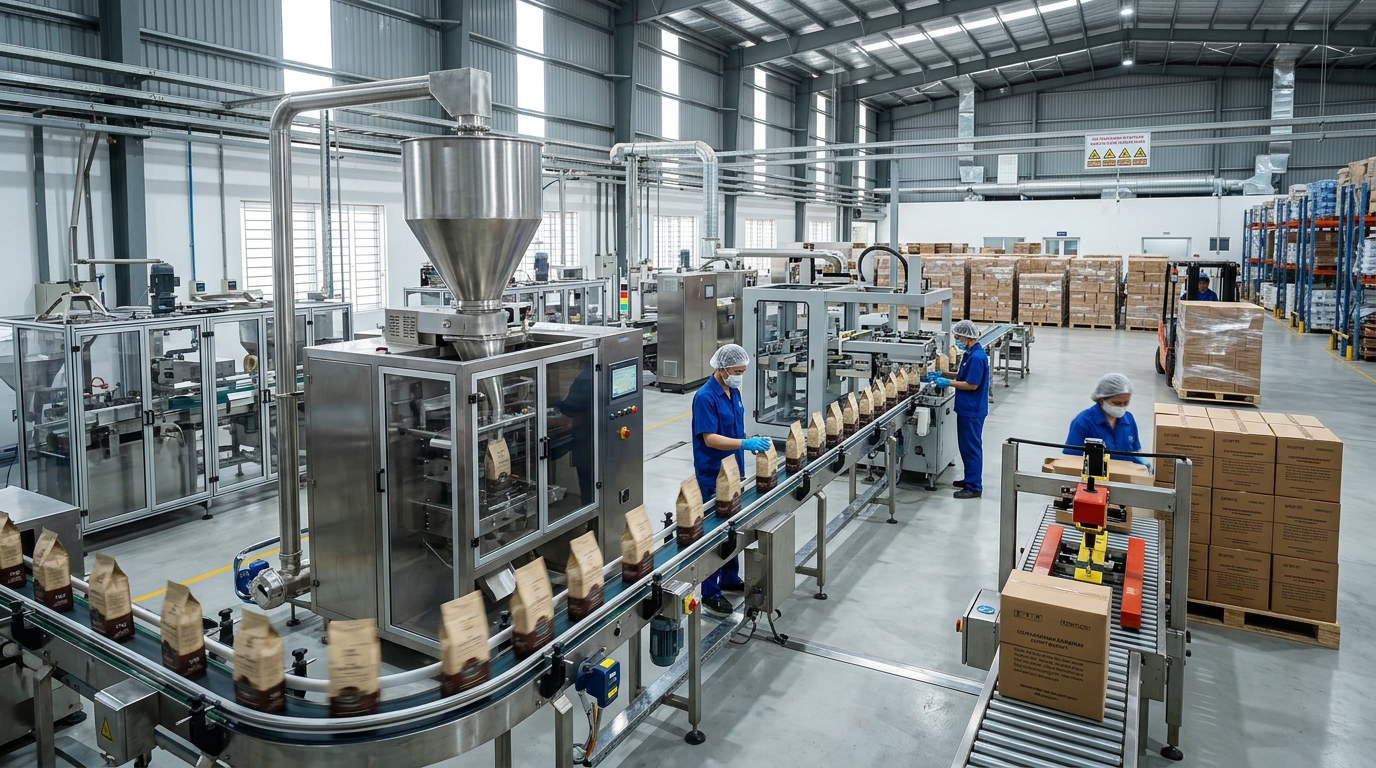
Second, the country is moving deeper into value-added processing. Roasted coffee, instant coffee, and soluble coffee are expanding, which creates room for co-manufacturing, private label, and origin-based product development.
Third, sustainability certification and traceability are becoming more available. Many farms already participate in 4C, Rainforest Alliance, Fairtrade, and similar programs. For buyers, this makes it easier to build compliant supply chains and long-term sourcing relationships.
Fourth, there is growing potential in specialty and premium robusta. Buyers who understand this segment early may gain access to differentiated products before the market becomes crowded.
Why global buyers should pay attention now
The strongest argument for Vietnamese coffee is simple: it is no longer just a cheap origin. It is a strategic origin.
It combines scale, quality improvement, and industrial relevance. As global roasters look for affordable blending solutions, as soluble coffee makers seek dependable robusta supply, and as importers face stricter compliance requirements, Vietnam is becoming even more important.
For manufacturers, the opportunity is not only to buy coffee, but to build partnerships in processing, traceability, and product development. For importers, it is a chance to secure a high-volume origin with deep market acceptance and room for further quality differentiation.
Conclusion
Vietnamese coffee stands at the intersection of scale and transformation. It remains one of the world’s most important robusta origins, but it is also moving toward more traceable, more sustainable, and more value-added production. For importers and manufacturers around the world, that creates a strong buying case.
Those who engage early, build direct relationships, and invest in traceable supply chains will be best positioned to benefit from Vietnam’s next phase of growth.
Adalidda supplies premium Vietnamese coffee to leading importers and manufacturers worldwide. Sourced from top-tier producers across Vietnam, our coffee meets the highest international quality standards and is available in flexible volumes starting from 1,000 MT per month, including spot shipments. We tailor packaging to your exact specifications and ensure secure, efficient, and cost-effective logistics from origin to destination. For competitive pricing, complete technical documentation, GACC certificate, and reliable long-term supply partnerships, contact our sales team today.
Bibliography
World Coffee Research – Vietnam country profile (2024)
Vietnam Ministry of Agriculture and Environment – Press releases (Aug 2025) on export performance, and (Jun 2025) on EU Deforestation Regulation.
USDA FAS – Coffee Annual Reports for Vietnam (2023, 2024, 2025)
Daily Coffee News (June 2025) – “Vietnam Coffee Report: Production, Exports and Consumption All Rising”
Vietnam News (Jun 2024) – quoted in WCR (see WCR Vietnam)
Solidaridad Network, “The Grounds for Sharing – Vietnamese Coffee” (2024)
Trendeconomy/UN Comtrade data (2022) – Vietnam coffee exports by country
World Investment Review, “Deep processing leads to coffee group gains” (Mar 2025)
Nestlé – Media release (Jan 2024) on Tri An investment
Vietnam Investment Review (VIR) / Nod – reports on production (Nhân Dân, others).
Vietnam General Statistics Office – Coffee cultivation area (2023 summary; via Solidaridad)
FAO/ICO statistics – historical context (via FAOSTAT, ICO profiles).
ILO – “Promoting formalization in the Vietnam coffee industry” (2024)
Trade data and market reports (Foodmate/Tridge, Vietnambiz, etc.).
Industry and NGO sources: VICOFA, WASI, VietGAP, Rainforest Alliance.
Other academic/NGO papers cited: Hung Anh 2019, UN-REDD 2020, BASIC interviews.
All sources accessed March 2026.
World Coffee Research | Vietnam
https://worldcoffeeresearch.org/countries/vietnam
apps.fas.usda.gov
https://apps.fas.usda.gov/newgainapi/api/Report/DownloadReportByFileName?fileName=Coffee%20Annual_Hanoi_Vietnam_VM2023-0025.pdf
apps.fas.usda.gov
https://apps.fas.usda.gov/newgainapi/api/Report/DownloadReportByFileName?fileName=Coffee%20Annual_Hanoi_Vietnam_VM2025-0018.pdf
Vietnam Coffee Report: Production, Exports and Consumption All Rising
https://dailycoffeenews.com/2025/06/05/vietnam-coffee-report-production-exports-and-consumption-all-rising/
solidaridadnetwork.org
https://www.solidaridadnetwork.org/wp-content/uploads/2024/06/The-Grounds-for-Sharing-annex-Vietnam.pdf
Deep processing leads to coffee group gains
https://vir.com.vn/deep-processing-leads-to-coffee-group-gains-124191.html
Vietnam | Imports and Exports | World | Coffee, coffee substitutes | Value (US$) and Value Growth, YoY (%) | 2011 - 2022
https://trendeconomy.com/data/h2/Vietnam/0901
apps.fas.usda.gov
https://apps.fas.usda.gov/newgainapi/api/Report/DownloadReportByFileName?fileName=Coffee%20Annual_Hanoi_Vietnam_VM2024-0012
book 2. Summary of coffee. eng 9.7.24
https://www.ilo.org/sites/default/files/2024-07/book%202.%20Summary%20of%20coffee.%20eng%209.7.24.pdf
Vietnamese green coffee export standards to China, the EU, the US, and Japan
https://hello5coffee.com/vietnamese-coffee-export-standards/
Nestlé Vietnam invests $100M in coffee factory | Nestlé Global
https://www.nestle.com/media/news/vietnam-investment-coffee-factory
[32]
https://apps.fas.usda.gov/gainfiles/200307/145985648.pdf
Basic Information About The Dry Processing Method - VCU - VietNam Coffee United
https://vietnamcoffeeunited.com/basic-information-about-the-dry-processing-method/
The 10 largest coffee exporters in Vietnam for the 2022-2023 crop year
https://www.tridge.com/news/the-10-largest-coffee-exporters-in-vietnam-for-the
Vietnam’s coffee exports in 2025: Breaking records, targeting $8 billion
https://en.mae.gov.vn/vietnams-coffee-exports-in-2025-breaking-records-targeting-8-billion-8985.htm
Recommendations to ensure Vietnamese coffee meets EU sustainability requirements
https://www.tridge.com/news/recommendations-to-ensure-vietnamese-coffee--kfdbww