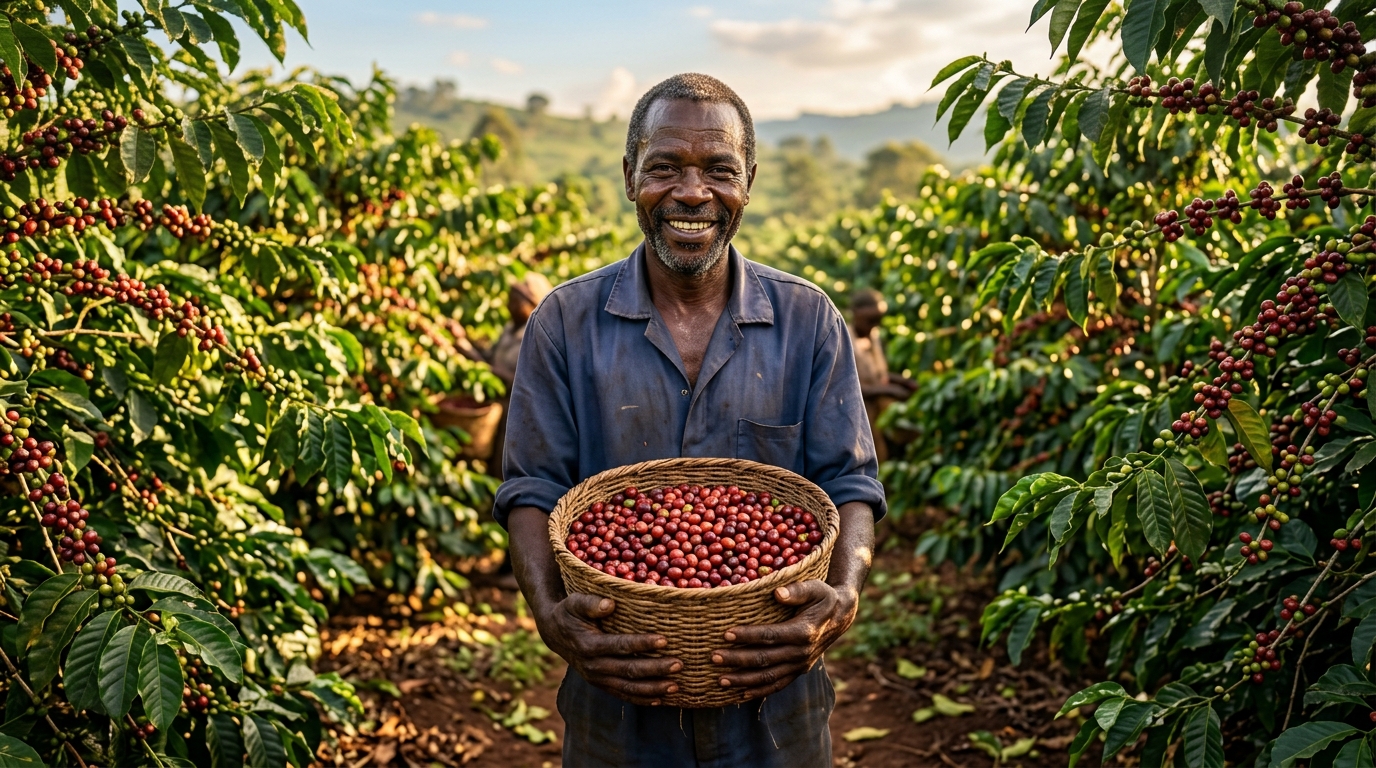
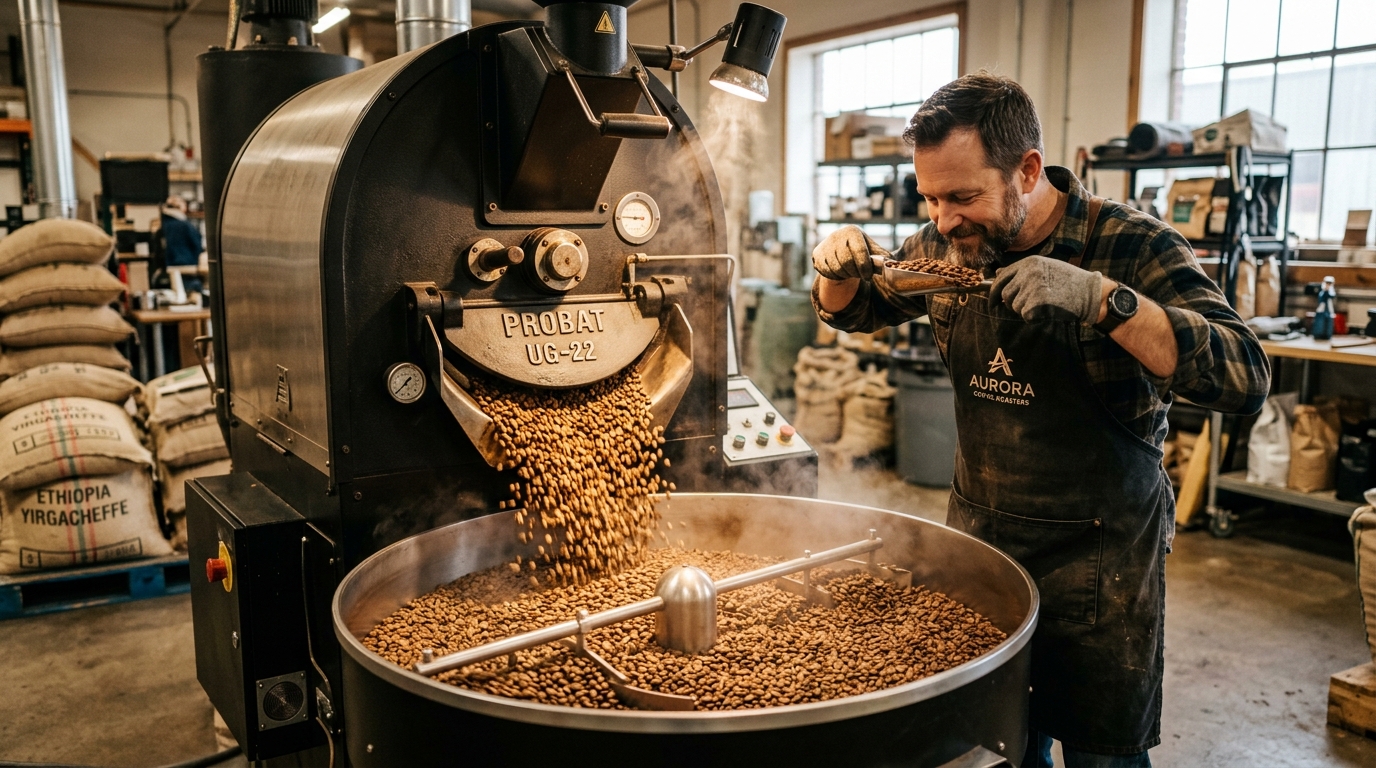
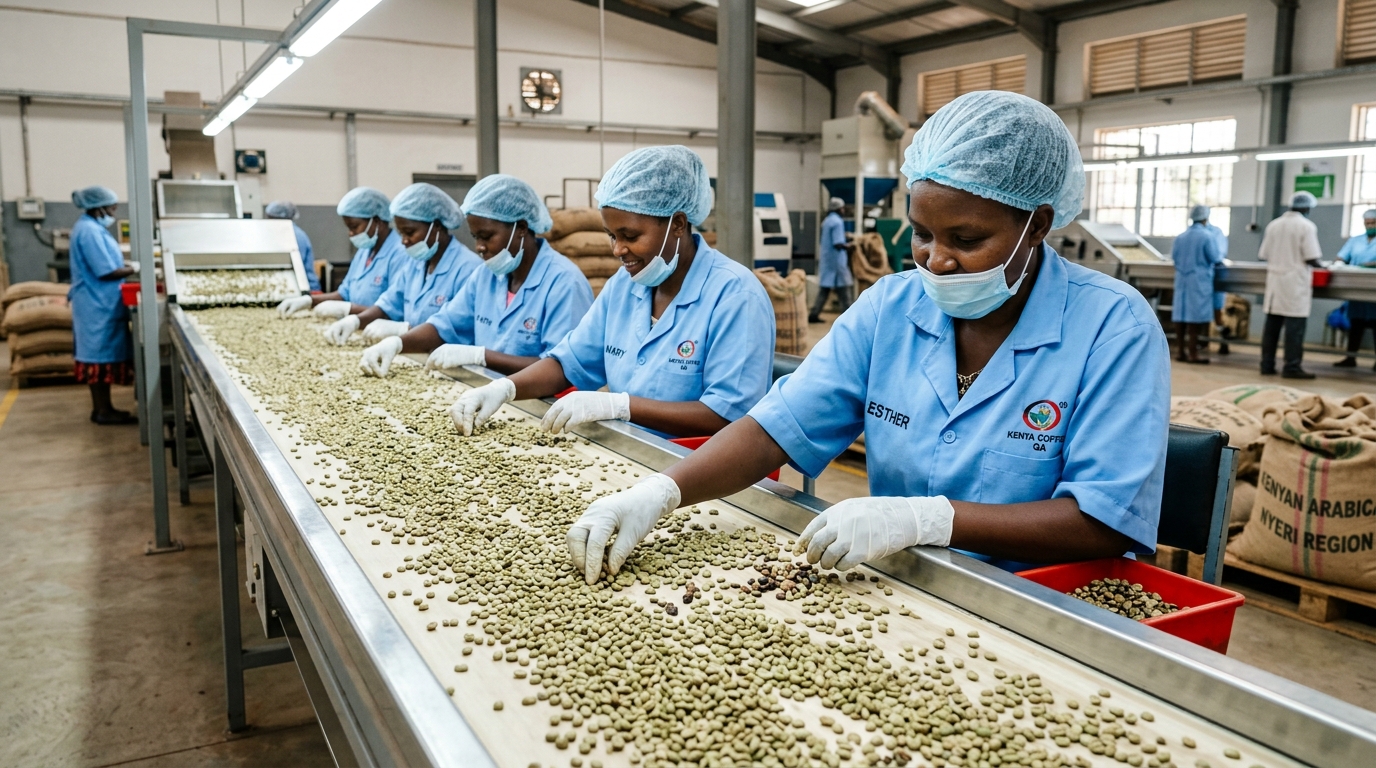
Africa is becoming an increasingly important origin for global coffee buyers seeking Arabica and Robusta with diverse flavor profiles, competitive sourcing opportunities, traceable supply chains, and access to certified and specialty coffees.
For international coffee importers, roasters, instant-coffee manufacturers, beverage companies, food manufacturers, and ingredient producers, African coffee offers more than origin diversity. It can provide a strategic sourcing option for commercial blends, premium and specialty products, soluble coffee, ready-to-drink beverages, functional ingredients, and food applications.
Africa produces roughly 19–21 million 60-kg bags of green coffee in recent coffee years, representing around 10–12% of global coffee production. Production is concentrated in East Africa, while important Robusta supply comes from Uganda and West and Central African origins.
Major African Coffee Origins
The African coffee supply base includes both globally recognized Arabica origins and large-scale Robusta producers.
Origin | Main Coffee Type | Approx. Production 2022/23 | Approx. Production 2023/24 | Key Commercial Opportunity |
|---|
Ethiopia | Arabica | ~7.3 million bags | ~9.1 million bags | Specialty, premium, single-origin, blends |
Uganda | Mainly Robusta, some Arabica | ~6.6 million bags | ~6.4 million bags | Instant coffee, espresso blends, commercial coffee |
Tanzania | Arabica & Robusta | ~1.2 million bags | ~1.35 million bags | Specialty and commercial blends |
Côte d’Ivoire | Mainly Robusta | ~1.0 million bags | ~1.3 million bags | Soluble coffee and commercial blends |
Kenya | Arabica | ~0.75 million bags | ~0.83 million bags | Premium and specialty coffee |
Other relevant producing origins include Rwanda, Burundi, Democratic Republic of Congo, Cameroon, Madagascar and Guinea.
Together, Ethiopia and Uganda are the two largest African producers, while Tanzania, Côte d’Ivoire and Kenya add important volumes and origin diversity. The broader African supply base gives international buyers multiple sourcing options across both Arabica and Robusta segments.
Uganda is particularly significant for industrial buyers. Its coffee exports reached approximately 7.77 million 60-kg bags in FY2024/25, generating about US$2.22 billion in export earnings, demonstrating the country's growing importance as a commercial coffee supplier.
Why Global Buyers Should Consider African Coffee
For international procurement teams, the value of African coffee is not simply its origin story. The continent offers several commercially relevant sourcing advantages.
1. Dual Arabica and Robusta Supply
African origins can support different product strategies.
Arabica from Ethiopia, Kenya, Tanzania, Rwanda and Burundi can be used for:
Robusta, particularly from Uganda and Côte d'Ivoire, is highly relevant to industrial buyers requiring:
Instant coffee
Spray-dried and freeze-dried coffee
Espresso blends
Commercial roasted coffee
Foodservice coffee
High-volume blended products
For manufacturers, this creates an opportunity to diversify sourcing across multiple grades and origins rather than relying on a single producing country.
African Coffee Processing Methods
Processing methods significantly influence cup profile, consistency and suitability for different applications.
Washed Coffee
Washed or wet processing is particularly important in East African Arabica production.
Kenya and Rwanda have strong washed-coffee traditions, while a significant proportion of Arabica from Tanzania is also washed.
Washed coffees are often valued by specialty and premium buyers for their clean cup profiles, acidity, clarity and distinctive sensory characteristics.
This makes them suitable for specialty roasting, premium blends and single-origin programs.
Natural Coffee
Natural or dry processing is particularly important in Ethiopia and across many Robusta-producing regions.
Natural processing can produce coffees with more pronounced fruit, sweetness and body, while providing a commercially important processing route for large volumes.
For manufacturers, natural coffees can provide distinctive sensory characteristics for blends and differentiated consumer products.
Other Processing Opportunities
Honey processing, controlled fermentation and other experimental processing techniques are also emerging in selected African origins, particularly within specialty-coffee supply chains.
For specialty roasters and premium beverage manufacturers, these processing methods can create differentiated lots with distinctive sensory profiles.
Coffee Quality and Specifications for Importers
Global buyers typically evaluate African coffee according to origin, variety, processing method, grade, screen size, moisture, defect level, cup profile, certifications, traceability and consistency of supply.
Depending on the buyer's application, sourcing specifications may include:
Green coffee beans
Arabica or Robusta
Washed or natural process
Commercial or specialty grade
Screen size
Moisture specification
Defect tolerance
Cup profile
Crop year
Origin and production area
Packaging requirements
Certification status
Traceability documentation
Certificate of Analysis (COA)
Phytosanitary documentation
Pre-shipment inspection requirements
For industrial procurement, consistency and documentation can be just as important as cup quality. Buyers should therefore evaluate suppliers based on their ability to provide repeatable specifications and reliable shipment execution rather than evaluating samples alone.
Certifications and Responsible Sourcing
Sustainability and traceability are becoming increasingly important procurement criteria for European and international coffee companies.
African coffee is available through supply chains incorporating certifications and sustainability programs such as:
Organic production is particularly significant in Ethiopia and parts of East Africa. However, buyers should distinguish between coffee produced under organic farming practices and coffee that is formally certified organic.
For importers and manufacturers, certification requirements should therefore be specified at the beginning of procurement discussions.
Rainforest Alliance-certified coffee is also commercially important in Europe. In 2024, approximately 22.7% of European green-coffee imports were Rainforest Alliance certified, illustrating the scale of certified-coffee demand in the market.
EUDR and Traceability: A Critical Issue for European Buyers
For companies supplying the European Union, sustainability documentation is increasingly becoming a procurement requirement rather than simply a marketing advantage.
Coffee is covered by the EU Deforestation Regulation (EUDR). Under the current implementation timetable, the regulation applies to large and medium operators from 30 December 2026, with additional time for certain smaller operators. Companies placing coffee on the EU market must be able to demonstrate that the product meets the regulation's deforestation-free and due-diligence requirements.
This creates an important opportunity for African exporters and suppliers that can provide:
Farm-level or plot-level traceability
Geographic coordinates where required
Producer information
Supply-chain records
Production and harvest information
Relevant sustainability documentation
Consistent shipment documentation
For European importers, selecting suppliers capable of supporting traceability and compliance can significantly reduce procurement risk.
Major Markets for African Coffee
African coffee is supplied to major coffee-consuming and processing markets worldwide.
Europe
Europe remains one of the world's most important coffee markets and the largest regional market for green coffee. Germany is Europe's largest green-coffee importer and trade hub, followed by major markets and hubs including Italy, Spain, Belgium, Switzerland and the Netherlands. These six markets together account for approximately 80% of European imports from producing countries.
Germany is particularly important for African suppliers. In 2024, Germany imported approximately 1.16 million tonnes of green coffee, including significant volumes of Ugandan coffee.
For Robusta specifically, Germany and Italy are Europe's two largest importing markets. In 2024, Germany imported approximately 251,000 tonnes of green Robusta directly from producing countries, while Italy imported approximately 243,000 tonnes. Spain followed with approximately 142,000 tonnes.
Belgium is also strategically important because it functions as a major European coffee trading and re-export hub. In 2024, approximately two-thirds of Belgium's green-coffee imports were re-exported to other European countries.
North America
The United States remains a major global coffee-consuming and importing market, creating opportunities for African origins across commercial, specialty and premium segments.
African Arabica is particularly relevant to specialty and premium roasting programs, while Robusta can be incorporated into espresso and commercial blends and soluble-coffee applications.
Asia
Asian demand is also becoming increasingly relevant, particularly across markets with expanding coffee consumption and processing industries.
China, India and other Asian markets offer opportunities for suppliers of both Arabica and Robusta, including industrial and commercial-grade coffee.
For exporters, Asia can therefore provide an important diversification strategy alongside traditional European and North American destinations.
Industrial Applications of African Coffee
African coffee can serve a broad range of downstream industries.
1. Roasted Coffee
Roasters use African Arabica and Robusta in:
Single-origin coffees
Espresso
Filter coffee
Commercial blends
Premium blends
Foodservice products
Private-label coffee
African Arabica can provide distinctive floral, citrus, fruit and berry characteristics, while African Robusta can contribute body, crema, strength and cost efficiency to blends.
2. Instant and Soluble Coffee
Robusta is particularly important to the soluble-coffee industry.
Large-scale instant-coffee manufacturers can use African Robusta in:
Spray-dried coffee
Freeze-dried coffee
Instant coffee blends
3-in-1 coffee products
Coffee concentrates
Ready-to-drink coffee
For high-volume manufacturers, Uganda and Côte d'Ivoire can therefore represent strategically relevant sourcing origins.
3. Ready-to-Drink and Functional Beverages
Coffee is increasingly incorporated into:
Ready-to-drink coffee
Cold brew
Energy beverages
Coffee concentrates
Protein beverages
Functional beverages
Manufacturers may require consistent coffee extracts, soluble coffee or standardized caffeine content depending on the formulation.
4. Food Manufacturing
Coffee and coffee extracts are used in:
For food manufacturers, coffee can be sourced not only as whole green beans but also as roasted coffee, ground coffee, extracts, concentrates and other processed ingredients.
5. Cosmetics and Personal Care
Coffee-derived ingredients are also used in personal-care formulations.
Coffee oil, caffeine and coffee extracts may be incorporated into:
Skin-care products
Body scrubs
Hair-care products
Anti-aging formulations
Personal-care products
However, these applications generally require specific extraction, purity, microbiological and formulation specifications, rather than conventional green coffee specifications.
6. Nutraceutical and Functional Ingredients
Caffeine and green-coffee extracts are used in selected nutraceutical and functional-product applications.
Depending on the final application, manufacturers may require standardized extracts with defined levels of active compounds rather than conventional coffee beans.
7. Coffee By-Product Valorization
The coffee industry also creates opportunities for circular-economy applications.
Coffee pulp, husks, silverskin and spent coffee grounds can potentially be processed into products such as:
These applications can help increase the economic value recovered from the coffee supply chain.
What Global Coffee Importers Should Look for in an African Supplier
For professional procurement teams, the right African coffee supplier should be evaluated against more than price.
Key criteria include:
Origin and supply capacity
Can the supplier consistently provide the required volume throughout the contracted period?
Quality consistency
Can the supplier maintain agreed specifications from shipment to shipment?
Traceability
Can the supplier document the origin and supply chain of the coffee?
Certifications
Can the supplier provide Organic, Fairtrade, Rainforest Alliance, 4C or other certifications when required?
Documentation
Can the supplier provide COA, phytosanitary documents, packing lists, certificates of origin and other export documentation?
Packaging and logistics
Can coffee be packed according to the importer's requirements and shipped efficiently to the destination port?
Pre-shipment quality control
Can samples, inspections and laboratory testing be arranged before shipment?
Commercial reliability
Can the supplier support trial orders before moving toward recurring monthly contracts?
Long-term supply capability
Can the supplier scale volumes as the buyer's demand increases?
These factors are particularly important for manufacturers whose production lines depend on uninterrupted raw-material supply.
African Coffee as a Strategic Sourcing Opportunity
For global coffee importers and food & beverage manufacturers, Africa should not be viewed as a single coffee origin.
It is a multi-origin sourcing region offering different combinations of Arabica, Robusta, processing methods, quality profiles, certifications and commercial applications.
Ethiopia and Kenya provide internationally recognized Arabica origins for premium and specialty programs. Uganda offers significant Robusta capacity for commercial blends, espresso and soluble-coffee applications. Tanzania provides both Arabica and Robusta, while Côte d'Ivoire and other West and Central African origins add further Robusta sourcing opportunities.
Europe remains particularly attractive for African coffee suppliers. Germany is the continent's largest green-coffee importer and trade hub, while Italy and Germany are leading markets for Robusta. Belgium and the Netherlands also function as important trading and distribution hubs.
For buyers, the opportunity is therefore not simply to purchase African coffee, but to build a diversified, traceable and commercially reliable African sourcing program.
African Coffee Supply from Adalidda
Adalidda supplies African Arabica and Robusta coffee to international importers, coffee traders, roasters, instant-coffee manufacturers and food & beverage companies.
Our sourcing approach is designed for buyers looking for dependable commercial supply rather than one-off spot transactions.
Depending on origin and availability, supply can be structured for:
Commercial-grade Arabica and Robusta
Premium and specialty coffee
Washed and natural-processed coffee
Certified coffee programs
Recurring supply contracts
Spot purchases
Containerized shipments
Buyer-specific packaging requirements
We can support buyers with product specifications, COA, samples, origin information, documentation and supply discussions according to the requirements of the destination market and end application.
For larger buyers, supply programs can be structured from 50 × 20-foot containers per month or on a spot basis, subject to origin, crop availability, specification and contract terms.
Looking for African Coffee Supply?
Whether you are a green-coffee importer, international coffee trader, roasting company, instant-coffee manufacturer, private-label brand, beverage producer or food manufacturer, African origins can provide an important additional sourcing option for your supply chain.
Contact Adalidda to discuss your required origin, Arabica or Robusta grade, processing method, certification, volume, packaging, destination port and delivery terms.
We can provide available specifications and develop a supply proposal aligned with your procurement requirements.